Posts tagged Matt Waldman RSP

Mirror Images: Darren Sproles/Charles Woodson

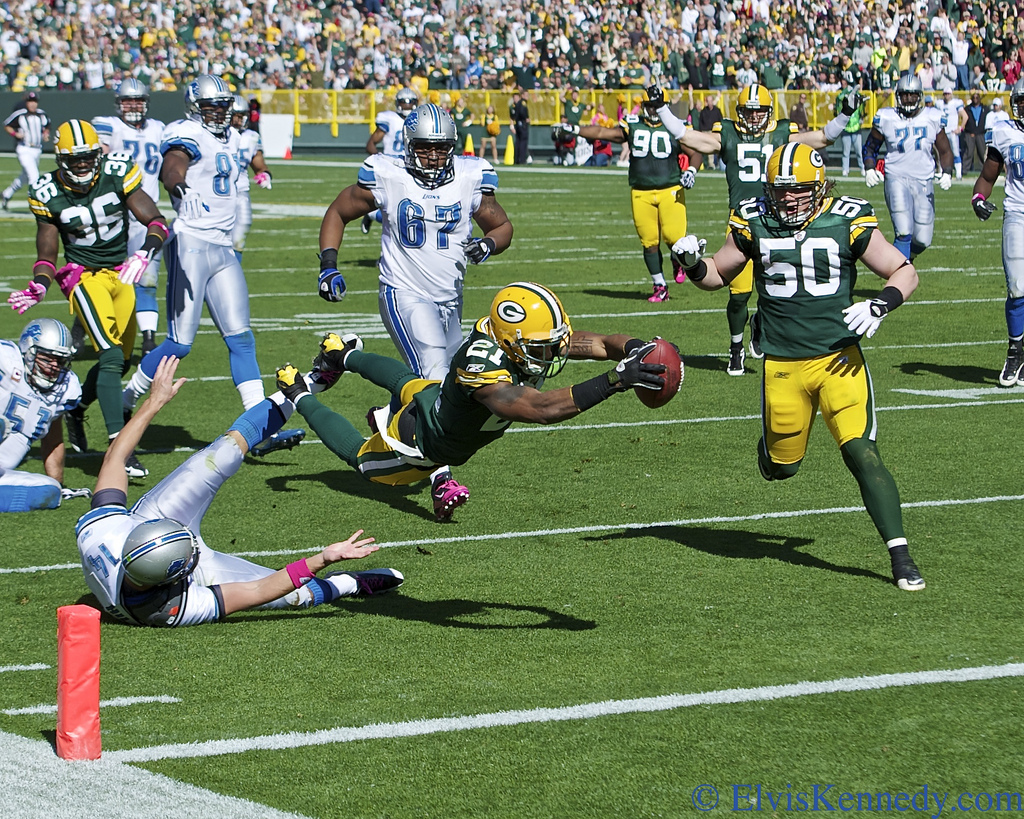
Charles Woodson still has it. Perhaps not for very long, but long enough to help my team as a veteran presence and versatile option. Photo by Elvis Kennedy.

By Cian Fahey, Pre Snap Reads

Editor’s Note: A game I’ve been playing in my head in recent months is to take an offensive player and find his mirror image on the opposite side of the line of scrimmage. For example, Joey Galloway and Darrell Green were stylistically mirror images of each other. Both had amazing speed that sometimes overshadowed their underrated displays of craft at their respective positions over the course of lengthy and productive careers. Now I’m putting it on the blog and having some of my friends play.

Here’s an idea. Take 11 offensive players and 11 defensive players. Whoever you want, there are no limitations to who you want to choose. Set up in whatever formations you want, run whatever plays you want, but every single play must work to the strength of every single player you have on the field. You can’t run a screen with Calvin Johnson and you can’t drop Demarcus Ware into coverage. Easy, right?

Okay, now do the same, but you have to include Darren Sproles and Charles Woodson on the field. Where do you put them? What do you ask them to do?

You can probably rule out running the ball with Sproles, but you still have to figure out where he should line up and what route he should run. Is he best as a slot receiver? Releasing from the backfield? In a receiving position behind an offensive tackle? Behind a receiver in a bunch?

Once he’s lined up, should we run a screen for him? Use that screen as a decoy? Give him an option route in space? A quick pass in the flat so he can turn the corner in space?

What about Woodson? Let’s put him outside on a top receiver, or maybe move him into the slot to cover a quicker possession receiver? If he is in a safety position he can come up in run support or read the quarterback’s intentions though? Should we blitz him off the edge? Spy the quarterback? Put him in a zone or ask him to trail someone in man coverage?

It’s next to impossible to figure out how to best use Charles Woodson and Darren Sproles. Yet, no matter where you put them and what you ask them to do, you’re more than likely going to get something spectacular after a handful of snaps.

Woodson and Sproles have always shared a skill-set in my eyes. They don’t look anything like each other from a physical point of view. Woodson is 6’1″ and has somewhat of a lanky frame with long arms and a stretched core. Sproles on the other hand is a very compact 5’6″ without any real wingspan to speak of. What links the duo is their versatility and ability to create from anywhere on the field in any situation.

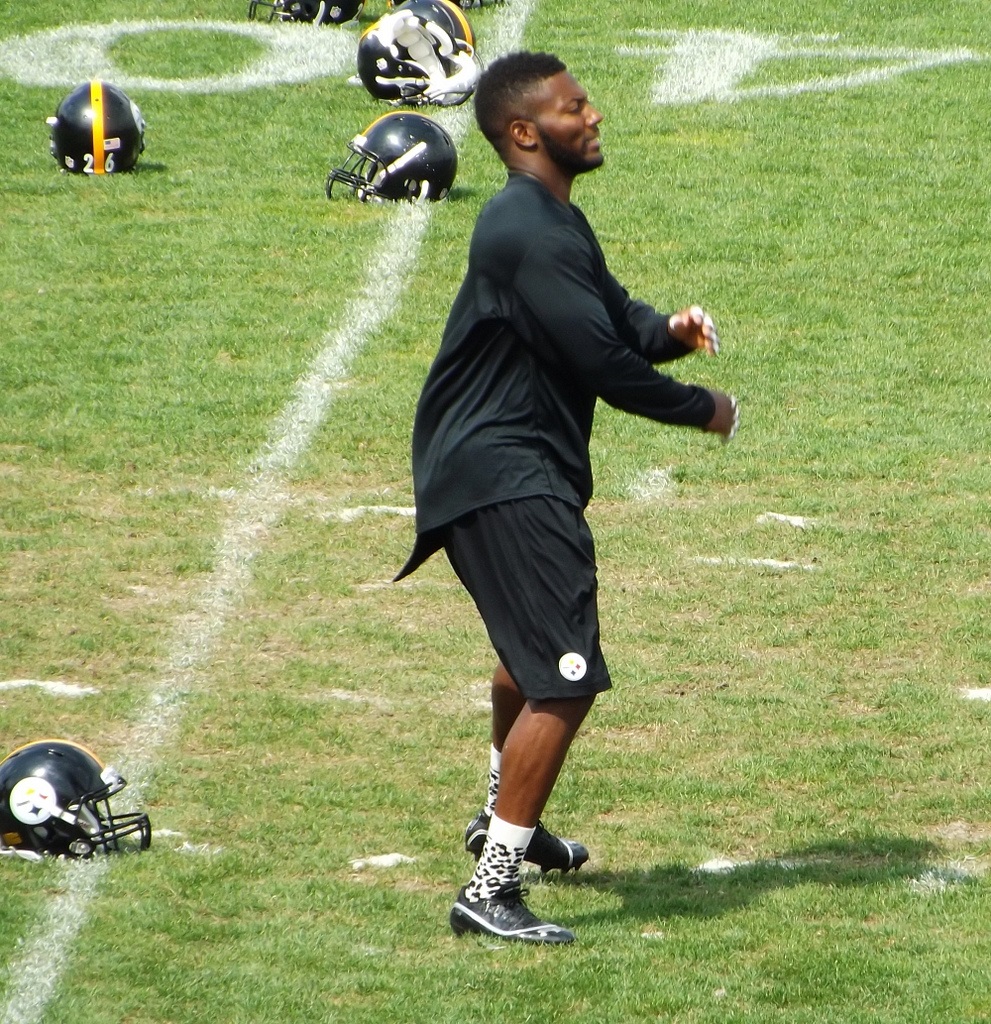
Darren Sproles by Football Schedule

Sproles is considered as a receiving back rather than a running-back, and his usage over the years supports this suggestion, but the Saints have had great success with him running the ball since he came over from the San Diego Chargers in 2011. Sproles averaged 6.9 yards per rushing attempt during his first season and 5.1 yards per carry during his second, most recent season in New Orleans.

He’s not Adrian Peterson, but he’s also not LaRod Stephens-Howling. Sproles might not run over people often, but he uses his considerable bulk combined with his low-center of gravity to break tackles and gain forward momentum in space and at times between the tackles.

Having the ability to run between the tackles, run outside, catch passes out of the backfield, and run screens is like being a cornerback who can line up on either side of the field, in the slot, as a seventh piece of the front seven, while being able to blitz, play the run, drop into zone coverage, spy the quarterback, and play man coverage. In other words, it’s like being Charles Woodson.

Woodson has never been Darrelle Revis or Richard Sherman in their prime (that’s presuming each is at their peak now, which may be foolish to presume). He won’t lock down one receiver and allow the defense to forget about that side of the field for the day, but he will scare the life out of any quarterback that has to throw at him. Much like Sproles, it’s not the quantity of positive plays that Woodson accumulates, it’s the quality of the few that he makes that are the difference.

Every single time the Saints draw up a play for Sproles, it has the potential to go the distance to the end zone. Every time the offense falls into the trap of throwing towards Woodson, they risk seeing a defender take it the distance.

Woodson and Sproles are the NFL's version of Vinnie 'the Microwave' Johnson. Photo by Elvis Kennedy.
Woodson and Sproles are the NFL’s version of Vinnie ‘the Microwave’ Johnson. Photo by Elvis Kennedy.

Woodson has 11 career touchdowns, 55 interceptions, and 24 forced fumbles. He is a black hole on the field who is returning to the original black hole in Oakland. Big plays find their way to Woodson, just like they do to Sproles.

Of course, the players I’ve described above are not the same versions of Sproles and Woodson we’ll see moving forward. Both players are past their prime. As a running-back, even considering his limited usage, the 30-year-old Sproles will be entering the twilight of his career.

Woodson has already extended his career past the point where most consider him an impact player. The soon-to-be 37-year-old returns to the Oakland Raiders and hope to provide enough big plays to make a difference. Although both players are in decline and those plays are fewer and further between, they still strike fear into their opponents.

Dri Archer: Offensive Weapon/Caffeine Substitute

Dri Archer is DeAnthony Thomas without the hype. Photo by Lindsayjf91.

With an alarm clock that goes off at 4:30 am, dawn comes around fast in my household. It doesn’t help matters that I’m not a coffee drinker. But if I could watch more prospects with Dri Archer’s big-play ability, I’d have a great 5:00 am caffeine substitute.

The Kent State offensive weapon averaged 9 yards per carry (yes carry, not touch) on his 150 attempts in 2012. He was also the only player in the FBS to earn over 1300 yards rushing and catch over 500 yards of passes last year. There’s a good possibility that Black Mamba has nothing on Archer but more surrounding talent in a better offensive system.

The Go Daddy Bowl in Mobile Alabama might be one of Archer’s worst statistical outings – 99 total yards and a touchdown – but in this game Archer had one of the best non-scoring runs I saw last year. At 5’8″, 164 pounds, Archer is an inch shorter and 10 pounds lighter than Tavon Austin. Regardless of what anyone says, Austin will be a test case for smaller hybrid players. If Austin succeeds right away, Archer and DeAnthony Thomas could see their draft stock rise and we begin to hear analysts talk about skill in “pound-for-pound” terms.

If Austin’s game translates, here is a coming attraction of what Archer might bring to a pro stadium near you.

Short Area Handling + Long Speed = Instant Offense

Here’s a jet sweep in the first half of the Go Daddy Bowl where Archer gains 44 yards on one of the best individual displays of speed and agility I saw in 2012. This is a 1st and 10 at the Kent State 34 from a 1×2 receiver, 11 personnel set. Archer is the single receiver on the strong side of the formation and motions towards the quarterback, taking the jet sweep as the strong side guard and running back pulls to the weak side edge. Here’s the play and below it, my thoughts on how it unfolds.

[youtube http://www.youtube.com/watch?v=E_ZfDeYl5lA?start=66&w=560&h=315]

Archer sets up his blocks with a fantastic cut inside the running back, who has to contend with an edge defender penetrating seven yards deep into the backfield. It’s not just the deep penetration early in the play that makes the ball carrier’s adjustment so impressive, it’s the fact that he has to dip inside the running back and away from the quarterback.

Avoiding one obstacle this early in a play is enough to foil most runners, but I’ve seen enough quarterback-runner collisions in my day to believe that what Archer does here is that 1 out of 10 scenario that worked in his favor. Archer then makes a second dip inside the pulling guard as he gets just outside the hash to reach the line of scrimmage.

These two cuts not only prevent a loss, but open the field for a huge gain up the hash and flat. He beats the backside defender with his acceleration is in the second level. Eight yards later, he dips outside the safety with a lightning-quick change of direction at top speed as he crosses the first down marker.

Archer beats the defensive back around the corner and reaches the 50 (16 yards into his 44-yard gain) with another secondary defender five yards down field with an angle on the runner. Archer reaches the 45, takes two steps and dips inside the corner, using his outside arm to ward off the defender.

This is a strong example of how a stiff arm can have value as either an expression of leverage or power.  In Archer’s case it’s a simple tap of the flat-footed defensive back’s shoulder as he’s executing a swift cut to get behind three lineman working up field at the 40 and the stiff arm sends the defender to the ground.

Archer crosses behind these linemen at the 40, cuts across to the left hash at the 35, and makes a sharp cut inside the safety at the 30. If he doesn’t have to run into his wide receiver to make the cut he probably continues across the field and scores. However, the combination of his cut to avoid the corner and the flash of his teammate behind him forces Archer to cut towards traffic where there are five defenders within a five-yard radius.

As he reaches the 25 Archer is wrapped and it ends one of the best runs I’ve seen all year.

Again, I’ll recap why I loved this run and how it might give us a clue to what could make him a successful NFL prospect as an offensive/special teams weapon:

  • Archer has a feel for anticipating and avoiding penetration.
  • The ball carrier’s quickness and change of direction isn’t predicated on stop-start moves that don’t work as well in the NFL; he bends runs and accelerates through cuts, which coupled with his anticipation makes it even more difficult for backside pursuit to get easy plays when penetration alters the runner’s path.
  • Archer has a feel for setting up blocks and despite his electronically timed 4.28-speed, he has the patience to work behind his blockers.
  • Kent State’s big-play weapon plays with good pad level, keeps his legs moving, and understands the value of using a stiff arm to ward off contact as opposed to an instrument of punishment.

If not Austin, Why Not DeSean Jackson?

The Eagles receiver is 6’0″, 178 pounds and has shown he’s a capable, impact player as an NFL starter split from the formation. Archer has the fundamental skills that teams can build on when it comes to receiving: He catches the ball with his hands away from his body, and he doesn’t let impending contact dissuade him from attacking the football or break his concentration.

[youtube http://www.youtube.com/watch?v=ARPF1KIiiZ8?start=185&w=560&h=315]

I also like that there is some evidence of Jackson using his hands and feet to work free of a potential jam from Dolphins draft pick Don Jones on this play.

This 18-yard gain is Archer’s final catch of the game –  2nd and 10 at the Arkansas State 45 with 0:57 in the half from a 2×1 receiver, 11 personnel shotgun set. Archer is the slot man on the strong side at the right hash with a safety playing 15 yards off the hash and Jones as the nickel back playing  two yards off the line of scrimmage to Archer’s inside.

[youtube http://www.youtube.com/watch?v=E_ZfDeYl5lA?start=155frameborder=&w=560&h=315]

A second safety is in the middle of the field about eight yards off the line of scrimmage but Archer and the quarterback do a good job of reading him crowd the line of scrimmage as the pre-snap phase ends. It this safety that gives the quarterback and receiver an opening to exploit.

Archer does a fine job of using his hands to avoid Jones’ jam as he slants across the field to the opposite hash, catching the ball 12 yards to the opposite hash with his hands.

I haven’t seen enough from Archer to give a serious comparison to Austin or Jackson beyond his athleticism and open-field skill. In these respects, Archer fits within this spectrum of athlete. However, as much as I appreciate what Archer does from the backfield I can’t help but see him more as a niche player than an every-down threat unless he’s drafted as a receiver.

There’s more I have to watch before I can deliver a more definitive analysis. Still, Archer is a player who can wake up defenses and fans in a hurry and it makes him worth watching when Kent State takes the field in September.

For analysis of skill players in this year’s draft class, download the 2013 Rookie Scouting Portfolio.The 2014 RSP will available April 1 and if you pre-order before February 10, you get a 10 percent discount. Better yet, if you’re a fantasy owner the 56-page Post-Draft Add-on comes with the 2012 – 2014 RSPs at no additional charge and available for download within a week after the NFL Draft. Best, yet, 10 percent of every sale is donated to Darkness to Light to combat sexual abuse. You can purchase past editions of the Rookie Scouting Portfolio for just $9.95 apiece.

Reads Listens Views 6/14/13

If you read the David Eggers book, then you know this picture. Photo by Screen Punk.

Another Friday, another Reads Listens Views. This week has its routine mix of football and non-football content. The real world content (as usual) is often so quietly disturbing that I know 99 percent of you won’t even read it. That’s okay, I share it for the handful that do because fortunately for me I don’t have to always blow sunshine up people’s hind parts.
[youtube=http://youtu.be/28DfvvfZLi0]

Some people hate covers. I’m not one of them. Sometimes you learn more about the quality of a song when someone other than the artist that introduced it to the public performs it. I couldn’t think of a better artist to cover a Sting tune than Stevie Wonder. Whether or not ballads with a bossa nova feel is your thing, I think you can appreciate the craftsmanship of the lyrics and music. On another note, if Sting is just a few years younger than my dad and looks like that, I’m getting back to doing yoga every day. Here’s Sting talking about his yoga experience just a few years after he started it.

I was planning to anyhow, but this was just another source of inspiration.

Of course musicians who make improvisation a high art form have no problem with playing covers . Here’s one of my recent favorites of one of some of the greatest modern performers at their individual instruments playing the Thelonius Monk Blues Straight, No Chaser.

[youtube=http://youtu.be/0uYDBVoUjPo]

Thank You

Normally, this is my weekly ritual to thank my readers for visiting the Rookie Scouting Portfolio blog and/or buying the Rookie Scouting Portfolio publication. Today, I want to thank a subset of my readers that do a lot of positive things for me – the blogging, web, and Twitter community. You have been a source of inspiration, camaraderie, and assistance since I started this blog two years ago.

Writers like Robert Miller, Doug Farrar, Chris Brown, the Dynasty League Football crew, Ryan Lownes, Josh Norris, Sigmund Bloom, Cecil Lammey, and a host of others have routinely sent people here. I don’t participate often in Twitter’s ‘Follow Friday’ ritual, but thanks to all of you who mention me in your lists. I’ll defer to Cian Fahey’s excellent list of people to follow on Twitter that even includes humorous and informative example tweets with each person he recommends (and by the way, Fahey caught me on a good day).

If you’re new to the Rookie Scouting Portfolio look around. There’s a lot of work that I believe you’ll find worth the read. Here are a few suggestions:

If you’re one of the many who have bought the 2013 RSP and it was your first time, I appreciate all the great feedback about your experience reading it. If you haven’t downloaded the RSP yet, you can click these links to learn about it and the post-draft add-on. If you’re not aware, the RSP donates 10 percent of each purchase to Darkness to Light, a non-profit whose mission is to train individuals and communities on sexual abuse prevention and how to address the tragedy when it happens. I have many reasons for believing in this cause, but the Penn State scandal is a perfect illustration that a significant part of the problem are everyday people like us who make mistakes with how to handle it when it happens.

This week is going to be heavy on the ‘listens’ and ‘views’ part of this Friday ritual.

Football

  • I rarely get to post something that Joe Bryant writes, because he’s usually too busy running a business called Footballguys.com. However, I enjoyed his post about Bill Belichick’s handling of the post-Tebow press conference. And I agree, it isn’t that hard.
  • If you follow Bryant or Chris Brown then you probably saw this tackling drill, but I want to talk about it a little more. It doesn’t require me to tell you that it’s safe, teaches good form with the hips, knees head, and arms. If someone can invent or modify a ball that can change direction, it could be even better.
  • Beyond hats, I’m not big fan of consumer football apparel. I have a couple of jerseys and I never wear them. However, this is a good marketing concept by the NFLPA. Hopefully, they’ll put their money where their mouth is when it’s time to back up the good vibe.

Non-Football

  • This Guy Reinvented the Wheel – I don’t know many skateboarders, but this concept has wide-ranging applications beyond the hobby. Fascinating use a cube shape to create a better wheel.
  • This site Invisible People is a great project where a movie director interviews the homeless in the Seattle area. Here is a very short video profile of Mark, a man probably close to my age who suffered a nervous breakdown after his wife and daughter died and when he was released from a psychiatric hospital he had lost everything. The director always asks the people he profiles to share three wishes. Most of them can barely think of more than one and often the wish is rarely about themselves.
  • If you’ve made it this far then you realize that my non-football links are rather depressing. This is why I love having a blog. I can’t share this stuff elsewhere without someone telling me to spout more sunshine. They can blow that sunshine where the sun don’t shine because this is real shit that we ignore all too often. This story on our prison system is a necessary read. For a less graphic, but even scarier true account of what happens when an innocent man winds up in prison – and it’s chilling as hell – read Dave Eggers’ book Zeitoun.

[youtube=http://youtu.be/8OEjYquyjcg]

Blackfish looks like a quality whistle-blower story about a common sense issue that the movie ‘King Kong’ addressed nearly 100 years ago. I loved going to Seaworld when I was growing up and seeing Shamu was a thrill. It was also a bad idea.

Inspirational

[youtube=http://youtu.be/qX9FSZJu448]

McFadden-Murray Disciple: RB Charles Sims – The Film

SimsD5

Charles Sims is a disciple of the McFadden-Murray school of running back. Today I’m going to show you why.

If I were an unabashed opportunist, I’d claim that Darren McFadden’s disappointing career validated my pre-draft concerns about the Raiders back. But I’m not about being right for the wrong reasons. I still believe I missed on vital parts of McFadden’s game – aspects that make him a viable NFL talent. Recognizing the error of my ways helped me make a stronger assessment of Demarco Murray.

While not identical, McFadden and Murray in the same school of running back style. Soon-to-be-former Houston running back Charles Sims reminds me of these two runners. I have more to see before I can compare his athleticism to these two NFL starters, but it’s good enough for Sims to follow suit.

This 2012 contest against UAB is a good illustration of what makes Sims a good prospect as well as the lingering concerns that make staying in school a wise choice for 2013.

Sims’ Running Style

At 6’1″, 213 pounds, Sims is a taller back. It’s these dimensions and his gait that make him a similar type of runner as McFadden and Murray.

McFadden’s ability to bend runs at high speeds was something I downplayed in my pre-draft assessment. So were his suddenness and aggression in a gap scheme.  Although I think Murray is a good zone runner with skill to change direction with sharper cuts, Murray and McFadden both tend to “bend runs” rather than make sharp cuts.

There is also a similarity in their pad level although I think Murray has always been more consistent with his. After seeing McFadden illustrate his style could work, it helped me see that Murray’s gait would work just fine in the NFL. I didn’t worry about his balance the way some of my peers did.

When I watch Sims, I see a blend of both players. All three players are versatile, three-down options with  big-play ability. While they are nightmares for defenses if they get their pads square and a head of steam, their styles limit some of  their creativity at the line of scrimmage compared to runners like Maurice Jones Drew, LeSean McCoy, Jamaal Charles, or even Ahmad Bradshaw.

But that’s the beauty of the position; there is not just one successful style.

Speed and Acceleration

The game I’m using to illustrate Sims’ skill is a 29-touch 171-yard performance against UAB. Despite the impressive box score, I’m often more fond of seeing plays where the player in question encounters difficulty. It’s why I don’t shy away from poor box score performances if the touch-count is high enough.

Sims’ first carry is a good example of  the tough sledding he had early in the contest: A two-yard gain from an uptempo play on 2nd and 3 with 12:34 in the first quarter. Houston runs an outside zone to the right and the blocking scheme fails.

SimsA1

The backside blocks fail to stop the pursuit and the right tackle is not fast enough to contain the edge defender. As Sims reaches the right hash, it becomes a footrace with the edge defender penetrating two yards into the backfield untouched. Because of the cornerback and linebacker free behind the edge defender, there’s no room for a cutback.

SimsA2

There are five defenders in this picture with an angle on Sims and only one lineman on his feet. Even that lineman has been beat. Yet Sims still manages to outrun the defensive end , turn the corner, and gain two yards.

SimsA3

SimsA4

This play should have been a loss if not for Sims’ speed, which earns the Cougars a manageable 3rd-and-one.

Like McFadden and Murray, Sims is a dangerous player in space because of his acceleration and it doesn’t take much green grass for him to turn on the turbo boosters. Here is an eight-yard gain on a 2nd-and-eight swing-screen from a 3×1 receiver, 10 personnel shotgun with 6:30 in the first half.

SimsB1

Sims flanks the trips side of the QB. The play is a quick-developing outside screen pass with two wide receivers blocking in the flat as the middle trips receiver motions across the formation as misdirection to fool the defense into taking  steps away from the actual flow of the play.

SimsB2

Sims swings to the flat, catches the ball over his  inside shoulder with his hands and does a good job of tucking under his outside arm as he makes a  fast, down-hill cut about three yards behind the line of scrimmage.

SimsB3

Sims accelerates well and splits the defensive back in the slot getting ahead of the defensive end working down the line of scrimmage. These are two strong angles by defenders and the Cougars runner manages to beat them both.

SimsB4

Although the end wraps Sims from behind, the burst is good enough for the back to earn eight yards and the first down.

Sims’ acceleration can catch opponents off guard. This 36-yard streak up the right sideline with 4:35 in the half is a great example. The play is a 2nd-and-10 pass at the UAB 41 with Sims beginning the play flanking the quarterback to the opposite side of a quads set.

SimsC1

Sims motions from the backfield to the right side where he is the single receiver and draws a cornerback playing single coverage. At the snap, Sims demonstrates good footwork to dip inside-out and earns strong separation on the corner by the time he’s 15 yards down field.

SimsC2

There’s even a nice use of his hands to swipe past the corner to get outside without a jam.

simsC3

SimsC4

SimsC5

The runner makes the grab at the 15, turning back to the football and waiting on it just long enough to give the defender time to recover. The beaten corner wraps Sims at the 10 and drags the runner to the ground inside the 5. A better throw and this is an easy touchdown.

Good Ball Security Form, But Execution Needs Improvement

Sims typically carries the ball high and tight, but he’s experiencing lapses of concentration when it comes to his ball security at various stages of runs. Here is a 2nd-and-10 run from the Houston 25 with 6:20 in the first quarter. The play begins in a 3×1 receiver, 10 personnel pistol versus two safeties deep and a four-man front.

SimsD1

This is an inside zone play with Sims taking the ball towards the left guard and center who are double-teaming the left defensive tackle. Sims takes a strong approach towards the outside shoulder of the left guard. As he reaches the left hash he cuts back to the inside shoulder of the center.

SimsD2

This press and cut forces the weak side linebacker to move a step wider of the left guard and sets up the block. Sims then hits the crease inside the center at the line of scrimmage, bursts up the middle, and earns five yards.

SimsD3

This weak side linebacker spins away from the guard and pursues Sims as the Houston runner dips outside the oncoming safety six yards past the line of scrimmage. The defender reaches Sims a yard later, wraps the runner high, and spins the back to the ground as the backside pursuit punches the ball free.

SimsD4

Sims initially has the ball high to his chest, but it’s never tight enough to his body. The spin and contact exacerbates the looseness of his elbow from his body. Upon contact from the defender, the ball slips free and turns a nine-yard gain into a turnover.

SimsD5

SimsD6

While Sims’ ball security is decent for much of the run, his pad level is high enough for the linebacker to come backside and get his arm into the runner’s chest. Lower pad level prevents this type of exposure to the ball.

We’ll see instances where Sims’ pad level is lower when he finishes runs, but his height is a  critical factor with his lapses with ball security. There are plays where Sims demonstrates a more conscious effort to lower his pads, but his overall running style is unlikely to change. It means the best ways for him to improve his ball security will be to get stronger and maintain concentration on squeezing the ball throughout the play.

Two touches later – a 2nd and 5 with 4:16 in the first quarter – Sims almost loses the ball again at the UAB 7.   It was a common occurrence for the defense to earn penetration into the backfield early in this game and disrupt the flow of the running game. On this play, the middle linebacker and defensive end converge on Sims a yard deep in the backfield.

SimsE1

I like that Sims hits the crease hard and drags the end a yard after bouncing off the contact of the linebacker. He does a good job of keeping his feet moving and even demonstrates some body lean. However, the UAB defender rips at the ball and Sims has to make a juggling attempt to secure it with his left arm while falling to the ground.

The pad level is again an issue. The blue arrow is Sim’s actual pad level, but the ideal pad level is closer to the orange arrow. It’s clear to see how much Sims exposes the ball with his pads high. As he approaches the defense his pad level never changes.

SimsE2

SimsE3

Setting Up Defenders

I like that Sims adjusts to what defenders are doing in the game. UAB was successful getting early penetration into the backfield and converging on Sims for minimal gains. The Houston running back does a good job of turning this advantage against his opponents on a nine-yard gain on a 1st and 10 run with 5:31 in the half.

SimsF1

He did an excellent job pressing to the left side to bait he penetration up the middle and then spin inside the defender to reach the line of scrimmage.

SimsF2

SimsF3

The spin and burst from Sims opens a strong lane and I especially like the pad level that Sims display as he’s midway through the crease.

SimsF4

Note the pad level below. This is what Sims has to demonstrate earlier in runs.

simsF5

Sims’ pads don’t have to be this low at the beginning his runs, but this play is an illustration that his pad level issues area about two things: a high running style due his height and the lack of bend in his hips and knee and inconsistency of effort to correct it.  Sims’s pad level can get away from him early in runs if he doesn’t make a conscious effort early in the play.

Promising Pass Protector

Here is an excellent cut block on a corner blitz from the left side of the formation on 2nd and 10 with 5:46 in the half.

SimsG1

Sims crosses the formation from a 2×2 receiver, 10 personnel shotgun set and takes out the slot corner with an excellent block across the body of the cornerback.

SimsG2

The result is an 11-yard gain to the right flat for a first down . Note the way Sims works across the body of the defender and cuts high enough at the waist to force the defender to crumple to the ground at the point of the collision.

SimsG3

Run Bender With Cutting Ability

On the following play, Sims gains six yards on 3rd-and-three from the UAB 24 with 12:55 in the half from a 30 personnel 1×1 receiver pistol with a diamond look. They motion the left fullback to the right and then run a play where Sims follows the two lead blockers right and cuts back to the left on this outside zone play.

SimsH1

Sims does a nice job spotting the cutback lane, planting and changing direction with burst to beat the backside defenders through the crease to reach the line of scrimmage.

SimsH2

The burst from this cut is also impressive. Check out the space he generates 3-4 steps after the cut. Three defenders that were ahead of Sims are now in the rear view mirror.

SimsG4

Sims runs through a wrap to his leg a couple of yards down field and dips further to the backside to avoid the safety just enough to run through a wrap to his leg at the first down marker. He then drags two defenders hitting him from behind for another three yards. When he gets downhill he’s tough to tackle.

If Sims makes the unlikely decision to enter the 2013 NFL Supplemental Draft, I think he is worth a second or third-round pick. Depending on the team fit, he’d fall in a tier that separates Johnathan Franklin and Montee Ball. Perhaps even with Mike Gillislee if the fit isn’t optimal.

Since Sims is likely to transfer to a college program, I think the experience could increase his stock, which should increase his odds to contribute early in the NFL. If Sims remains a college athlete, keep an eye on his speed – both the long sprints and the short area burst. It’s what I’ll be watching closely to determine where he fits on the McFadden-Murray spectrum.

For analysis of skill players in this year’s draft class, download the 2013 Rookie Scouting Portfolio.The 2014 RSP will available April 1 and if you pre-order before February 10, you get a 10 percent discount. Better yet, if you’re a fantasy owner the 56-page Post-Draft Add-on comes with the 2012 – 2014 RSPs at no additional charge and available for download within a week after the NFL Draft. Best, yet, 10 percent of every sale is donated to Darkness to Light to combat sexual abuse. You can purchase past editions of the Rookie Scouting Portfolio for just $9.95 apiece.


Should I Stay or Should I Go? RB Charles Sims – Initial Thoughts

Charles Sims lacks the same top-end speed as Darren McFadden but the many positives of his style are similar to the Raiders back. Photo by June 10459.

University of Houston running back Charles Sims has been in limbo this spring, but one thing seems certain: He’s leaving the Cougars. One option is this summer’s NFL Supplemental Draft. Another is  is to transfer programs so he can increase his draft stock. Switching schools is a decision I believe Sims will make and I think it’s a good one.

Most see the logic here, but there is still a surprising undercurrent of disappointment among fans when a player chooses to leave his current school for another college – especially on his own volition. College football is business disguised as amateur sport, but it’s instances like this where it appears that the responsibility of maintaining the nobility of college football’s “rah-rah” veneer is on the amateur rather than the professionals running the game.

Emotional ties to a college still run deep and I don’t blame alumni for feeling this way. For some it’s an affront to their sense of loyalty to see a scholarship player “ditch” a program like Sims. However, I think this underscores a disconnect between the way alumni and fans view student-athletes and the rest of the student population.

We don’t question a student’s decision to enroll at an MBA program at a different school after he earns an undergraduate degree in business. This is the natural path for a student to maximize his earning potential in the job market. No one questions his loyalty.

Yet some don’t see it the same way with student athletes.  Sims – who has earned his degree – has another year of eligibility in the sport  he hopes to play as his full-time job. Just like the business student enrolling in an MBA program, Sims has strong chance to help himself in the professional football job market if he gets another year of training.

The running back  is doing the right thing by studying the job market,  getting feedback on his talents, and weighing the possibility of going to a higher profile football program that can help him get another year of preparation for the pros.  No disrespect to the Cougars football program, but Sims understands that the perception of playing in the Big East, Big Ten, or Pac-12 carries more weight with many NFL organizations.

Houston’s athletic program will allow Sims to transfer, but ESPN’s Joe Schad says the running back may leave only if he avoids the following programs:

  • Any school in the American Athletic Conference
  • Any school on Houston’s 2013 schedule
  • Any school in the state of Texas

Schad’s source connected to the Cougars program says Sims is looking at Cal and West Virginia.  Both situations make sense – Coaches Sonny Dykes and Dana Holgorsen are using the Houston Air Raid offense and working in conferences where Sims will get to play better competition on a bigger stage. There’s also incentive to head west: Cal’s projected starter at running back Brendan Bigelow is recovering from spring knee surgery.

Purely from the standpoint of raising one’s draft stock, Russell Wilson and Charles Sims have a lot in common right now.  Where it differs is what I think ‘the game’ (agents, trainers, and other people who make money off athletes) of pro football feeds a quarterback and a running back.

Quarterbacks tend to have longer careers so there’s often encouragement for them to stay in school another year.  They get to gain another year of maturity as a young adult and work at their craft on a stage where they continue to get in-game experience. Some believe this line of reasoning is just a front that the money-draft status wasn’t strong enough to go.

They may have a point, but as a parent of a young adult in college I can tell you that the potential for growth during the ages 18-22 is tremendous.  Every year can feel like a person packed in three. My kid left for college a young adult who knew everything, but really didn’t know anything. I see this all the time with students I interview at Georgia.

On paper, their credentials and accomplishments are fantastic. Many go on to earn multiple undergraduate degrees, major athletic achievements, Wall Street job offers, successful entrepreneurial ventures. I’ve even seen two Rhodes Scholars pass through here.

They say all the right things, but they’re playing a role.

They’re not phony; many of them are ‘trying life on’ the same way we go to a department store to shop for clothing. My daughter chose fashion design as her course of study while working two jobs. She’s naturally a math-oriented person, but she has been making clothing for several years and has a strong creative streak.

Anyone who has earned an arts degree that requires applied application of the study knows, working two jobs and undertaking a course of study with twice the number of classes and time-consuming projects as the average undergraduate major – who will ultimately go into a less competitive field with more earning potential – is a tough road.

I’ve been there. At some point you look up from the workload around the middle of your sophomore year and see future doctors, lawyers, and bankers taking 3-4 classes a semester and still having the time of their lives. My daughter did the same thing.

However, I’ve seen my daughter learn a great deal about managing her time, her money, and resolving interpersonal conflicts. These are real life skills that you can tell a kid about, show them how to do it as the model in your everyday life, and guide their initial decisions with constructive reinforcement and practice, but until they are doing it without a net, the lessons don’t stick.

In the past year, Chandler decided to change her major and transfer schools. Since that time she’s worked a lot, saved a lot, and planned her next steps better than I imagined. The difference in how she approaches her life this summer and last is like seeing a different person with the same personality. When my wife and I think about how much Chandler has learned during this time it feels a lot more time has passed than what’s on the calendar.

These are reasons why I think it makes sense that most college quarterbacks should stay in school. That additional year of learning to manage real life benefits them and their future NFL team.  Ask Pete Carrol about Marc Sanchez.

Running back is another story. It seems this position is encouraged to leave early. I think there’s a lot of selling based on fear.

What if you get hurt . . . 

You could lose your job to a underclassman . . . 

The average NFL career for a running back is a lot shorter than you think . . . 

All of these things about competition, injury, and career length are true. For every junior like Stevan Ridley, there’s three like Tellis Redman, Danny Ware and Tony Hollings. While he had to announce he was leaving Houston to begin the process of shopping other athletic programs, it appears he has done a good job of taking a deliberate approach.  And I think it would be a wise decision for him to return to school.

Sims has the talent to develop into an NFL starter. However, I do think another year at a program where the expectations will be higher, the surrounding talent a little better, and the stage a little bigger will help reinforce a healthy amount of confidence and maturity that he’ll need to develop into a successful pro.

Up Next: The film on Sims and why I think his style makes him a disciple of the Demarco Murray and Darren McFadden school.

For analysis of skill players in this year’s draft class, download the 2013 Rookie Scouting Portfolio.The 2014 RSP will available April 1 and if you pre-order before February 10, you get a 10 percent discount. Better yet, if you’re a fantasy owner the 56-page Post-Draft Add-on comes with the 2012 – 2014 RSPs at no additional charge and available for download within a week after the NFL Draft. Best, yet, 10 percent of every sale is donated to Darkness to Light to combat sexual abuse. You can purchase past editions of the Rookie Scouting Portfolio for just $9.95 apiece.

Read Listens Views 6/7/2013

I've built a Hot Tub Time Machine for Palmer, but Bruce Arians might have done me better. Photo by Keith Allison.
I’ve built a Hot Tub Time Machine for Palmer, but Bruce Arians might have done me better. Check out my thoughts on the Cardinals offense in 2013 at Footballguys Photo by Keith Allison.

Views

[youtube=http://youtu.be/VQm5gNo-5Vo]

A Message From Chet Gresham: Fake Football Writing Contest

Hello all you fake football writers and aspiring writers! Welcome to our 2013 writing contest. We’ll have prizes, guest judges, and a whole lot of fake football ideas being thrown around in a nice and orderly fashion. First off, let me thank our sponsors DraftDay and FantasyPros. Both great sites that I use more than the average obsessed fake footballer. Second off, you may ask, what’s in this for me!?  Details here.

Thanks

I’f you’re new to the blog, I make it a habit to post a mix of content on Friday and thank my readers for hanging around.

I don’t know when he broached this idea but Ryan Riddle conducted an informal survey of his Twitter followers, asking them to name “the best football sites out there.” Riddle didn’t specify what type of content – fantasy, stats, scouting, news, or strategy – he just wanted what first came to mind. Each person gave their top three sites in order.

Riddle released a list of 71 sites this week and the list is a strong group. I didn’t know about the survey so I didn’t vote. However I was glad there were folks who voted for sites like Coach Huey and Blitzology – two lesser known sites to the general public, but excellent resources for a lot of writers contributing content to sites higher on the list.

I expected to see  Football Outsiders and Footballguys place high on the list and readers didn’t disappoint – rating them 3rd and 7th among all sites, respectively. I was delighted to see that this site you’re reading placed 24th overall – tied with ESPN, X and O Lab, Draft Calc, and Cat Scratch Reader – and even earned a first-place vote.

I didn’t expect to see the RSP blog on the list, so it was a pleasant surprise to be in the top-third of a list as esteemed as this one. Thank you all for following my blog, sharing what you like, and buying the Rookie Scouting Portfolio publication.

If you haven’t bought the RSP before, I can say with pride that you’ll get as much out of it as I put into it – and I put everything I can into it. My readers will tell you they love it. If you’re on the fence, I am confident that you’ll realize this is one of those cases where there’s little hype to what I’m saying here. Plus, I donate 10 percent of each sale to Darkness to Light, a non-profit whose mission is to prevent and combat sexual abuse through community training and awareness.

Download the RSP now and know that with your purchase, you also get access to the 2013 Post-Draft publication that comes with it. At the very least, follow this blog click on the link on the left to follow and you’ll receive email updates when I post new articles that give you a taste of the analysis and detail put into the RSP publication. Then consider supporting the site (and do yourself a favor at the same time) by downloading the publication.

Football Reads

If the name Cian Fahey sounds familiar to you but can’t place it, setting in for some nice reads from the football writer who has been a part of two RSP Writers Projects and has most helpful providing updated spreadsheets tot the writers so we didn’t have too many duplicate draft picks. What I admire about Fahey as a football writer is that he isn’t afraid to take a stance that might earn him criticism, but it’s not something he does for the sake of attracting eyeballs to his work. You can follow Cian on Twitter at @Cianaf. 

Moreover, I recommend checking out his blog Pre-Snap Reads. Here are a few pieces I enjoyed reading this week:

Bonus Football Read

  • George, Visger, The Damage Zone – Patrick Hruby’s profile on Visger is a heartbreaking read, but he mainlines the truth about pro football players and the complex relationship they have with the sport. 

Non-Football Reads

  • Animal Behaviorist: We’ll Soon Have Devices That Let Us Talk to Our Pets – My wife once told me when were dating that my (now deceased) cat Mookie was a sweet guy and very smart, but warned me that if he ever started talking she was leaving and not coming back. I think this also goes for my cat Zookie, who she once told to “get a job” after shooing him off the new couch and two days later when I saw him sitting next to her, she explained that he “got a job” (he brought her a bird) so she had no choice but to indulge him. Still, if a device becomes readily available I doubt it will ever be allowed in our house. Plus, I’m pretty sure Zookie curses and speaks in slang neither of us would understand.
  • When The Beautiful Game Turns Ugly – A must-read by Wright Thompson. It’s not a comforting story, but it’s a great one because as much as the world has changed the elements that generate hate remain in place and easy to exploit.
  • Michael Jordan Has Not Left the Building – When you read a piece about an icon like Jordan and almost feel sorry for him because of his difficulty turning off the competitive switch as well as gaining insight to what makes him far more human now than what we were allowed to see in the `80s and `90s,  you know Thompson did a fine job.
  • Six Key Foods to Help Regulate Sleep – Former GM Ted Sundquist has a football site. I’m sure there’s other fine material to mine, but this piece about food and regulating sleep patterns by guest writer Christine Jones caught my eye first.

Views

I didn’t hear about this controversy regarding the Cheerios commercial this week (I was too busy reading about hatred and stupidity in Italy) to notice that we had our own example of parts of our country not quite ready to look at the world as a collection of human beings as individuals.

[youtube=http://youtu.be/kYofm5d5Xdw]

Great commercial and good for you, General Mills for standing behind it.

Listen-View

[youtube=http://youtu.be/KNa3gZfQfH0]

If you’re not used to the constant pause-rewind of football tape this could leave you jittery, but the chance to listen to Alex Gibbs talk about zone blocking is good stuff. H/T Chris Brown.

Coming Soon

  • More 2014 prospect articles
  • More 2013 camp watch pieces
  • A study on quarterbacks with dynasty leagues in mind at Footballguys

Early `14 Takes: Rutgers WR Brandon Coleman

Who knew? Photo by Eamonn.

Patriots rookie Mark Harrison might have been the best wide receiver on the 2013 Rutgers squad, but I’m not sure he was the most promising. That title may belong to Brandon Coleman, a 6’6″, 220-pound rising senior. Even if Coleman’s listed height gets exposed as SID-speak (Sports Information Department – also known as athletic department PR) for a true height of 6’4″, the Scarlet Knight receiver has the type of physical skills and raw technical grasp of the position to earn attention from the NFL. Some are already projecting that attention will translate to an early round pick.

I see the reasons why, but I have the luxury that many working for media corporations do not: I don’t have to deliver rankings for the 2014 class before I’ve seen enough of the class to make an informed decision. Next time you think about asking a draft analyst why a certain player was ranked so well heading into a season but by March he has a late-round grade, keep what I said in mind. It won’t always be the case, but it does pay to think critically about the nature of the business and not just about the nature of the player.

I think Coleman is the type of player whose stock could fluctuate greatly in either direction. I have studied two games of Coleman’s thus far and I can tell you that I don’t have enough information to feel comfortable saying where he stacks up. However, I enjoy writing about these murky situations. There’s often something worth sharing that the clear-cut, bottom-line answer doesn’t reveal.

What I see from Coleman that could elevate him to the first round of the 2014 NFL Draft is height, weight, speed, and the ability to adjust to the football and make these adjustments with his hands well away from the football. This 1st-and-10 target with 9:47 in the first quarter from the Rutgers seven is a good example. Coleman is the outside receiver on the twin side of an 11 personnel, 2×1 receiver set.

The Syracuse corner assigned to Coleman is a yard off the line of scrimmage and shaded outside the receiver. Coleman works outside the corner and out runs the defender, earning a step of separation at the 25 and extending his arms to make the catch on a fade route.

[youtube http://www.youtube.com/watch?v=Mc8QWAVE0Nc?start=7rel=0&w=560&h=315]

Watch the replay that follows. Coleman uses his inside arm early in the route to ward off the defender’s attempt to jam him before making a nice adjustment to the ball, fading to the sideline late as the ball arrives. I especially like how Coleman secured the football. He does a nice job of using his hands and fingertips to stab the ball with his outside arm as it arrives over his inside shoulder and then secure the pass to his body with his inside arm.

This is good coordination and fluid athleticism while in the act of veering away from the defender at the last moment. This late move to achieve horizontal separation is a less-discussed aspect of getting open because the emphasis is always about getting behind the defender and that is only part of the equation. Overall, it’s a nice adjustment for a 26-yard gain.

It’s the type of play that falls into Coleman’s wheelhouse as a tall, fast, long-armed receiver. What I want to see Coleman do in 2014 is run routes with hard breaks and make catches after contact when the defender is able to lower his pads and drive through the contact as Coleman is attacking the football. If he can exhibit good technique and consistent production in these two facets of his game, Coleman will earn that high ranking.

Another thing that clouds the draft-day picture for Coleman is quarterback play at Rutgers. Coleman earned nine targets against Syracuse and all but three of those targets were to some degree errant throws that required an adjustment. None of the adjustments I categorized as difficult targets, but they were closer to that end of the spectrum than they should have been:

  • Under thrown deep targets
  • Passes thrown hard and behind the receiver’s break on short routes
  • Late throws that prevent the receiver from running under the ball and away from the defender

An example of what Coleman is missing from the quarterback position is this deep post with 6:46 in the first quarter on 2nd-and-five from a 12 personnel twin right formation.  Coleman is the inside the receiver in this twin set and has a corner at the line of scrimmage shading the receiver to the outside.

The free safety is at the hash about eight yards deep and the strong safety and linebackers are five-six yards off the line of scrimmage in the middle of he field. The strong safety’s depth is the key for Coleman and his quarterback to know that a deep post that breaks right to left will come open behind the strong safety. Watch from 0:25-0:31 below:

[youtube http://www.youtube.com/watch?v=Mc8QWAVE0Nc?start=25rel=0&w=560&h=315]

At first glance, it appears that Coleman runs a deep post but cannot catch up to the pass as the ball lands near the Syracuse 10. Because we only see Coleman’s initial release and then him chasing the ball, one might conclude with this limited information that the receiver could not work past the corner and failed to get separation early enough to run under the ball. Watch the replay focused on the receiver’s route:

[youtube http://www.youtube.com/watch?v=Mc8QWAVE0Nc?start=34rel=0&w=560&h=315]

Coleman does face contact from the corner and he’s also in the path of the free safety over top, but the Rutgers receiver does a nice job of using his outside arm to keep the defender away from his body and at the same time reduces his inside shoulder to avoid contact from the free safety. It’s a nice release against two defenders aiming to slow him down.

I don’t think they do. If you freeze the frame at 0:38 in the video, you’ll see Coleman break inside the hash and have a solid yard of separation inside the corner. If the quarterback leads Coleman across the field, this target has a great chance of resulting in a touchdown. Instead, the quarterback throws the ball over Coleman’s right shoulder and forces an immediate adjustment from the receiver to straighten his break and veer back to the right hash.

Coleman’s adjustment is immediate, but it’s still too late for him to reach the pass. If he quarterback places the ball in the direction of the break, I have little doubt Coleman fails to reach it. One angle indicates the possibility of poor separation against two defenders, another reveals a nice route with a poor throw.

An element of Coleman’s game that requires immediate improvement is ball security. If there’s a takeaway from this Syracuse contest, it’s that Coleman’s long arms are both an asset and liability at this point in his career. This screen pass does a fine job of covering the spectrum of good and bad.

[youtube http://www.youtube.com/watch?v=Mc8QWAVE0Nc?start=65rel=0&w=560&h=315]

The play is a 12 personnel weak side twin set and Coleman is the outside receiver at the Rutgers 35. The beginning of the play is a good example of how Coleman uses is long arms to win the ball and beat an opponent.  He turns to the quarterback, squares his body to the target, and leaps for the ball placed over his head. This target requires good arm extension from Coleman and he makes the catch with both hands.

He secures the ball to his body and turns outside the oncoming corner who is hoping to blow up the play behind the line of scrimmage. Coleman squares the defender and makes a good, quick turn, tucking the ball to his left side and uses his use his right arm to shove the defender away. This move leaves the defender flailing for air. Coleman’s height and strength should make this a common even in his game tape, but thus far I have seen less of it than I thought.

I also like who Coleman looks to the second defensive back inside the lead blocker in the flat. Coleman does a good job working outside and then stopping and turning inside to set up the lead block as they reach the line of scrimmage. But the next decision as a ball carrier is not as clear-cut good or bad. After gaining three yards to the inside, Coleman sees the safety flash over top five yards away and opts to change direction back to the outside behind his lead blocker.

I think for this play it was a bad decision and he should have continued up the flat towards the inside. He had room to squeeze ahead of the trailing defensive end untouched and then take on the safety. This decision probably gets him close to the first down marker.

Instead, Coleman works outside, the corner beats the block, and hits the receiver over top. At the same time, the corner Coleman left on the ground earlier in the play, regains his feet, chases the receiver and delivers a hit  from behind.

Like many long-limb receivers,  ball carriage can be loose at the elbow for Coleman and on this play his elbow is not tight enough to his body. The cornerback hitting Coleman over top punches it loose.  Although Coleman is able to turn back and pounce on the ball, it’s an indication of deficient ball security natural to his body type.

Back to the ball carrying decision in the open field. While I thought it was a bad decision, it’s the type of hindsight analysis that is difficult use when judging the player’s vision. I understand why Coleman reacted to the safety flashing across the field and opted to use his lead block a second time.

At the same time, I see many college receivers try too hard to change direction and allow the pursuit to catch them. I’d rather see more commitment to the intended path and finish with the pads low. I think the best NFL receivers tend to commit down field and keep the momentum forward. Coleman has enough strength to work through glancing blows and run through arm tackles. I’d rather see him use his size to his advantage.

Overall, I see a receiver with similar physical skill sets and limited football environment as Demaryius Thomas and Calvin Johnson when they were at Georgia Tech. I still have more to watch before I can say where he compares along that spectrum of talent, but the stylistic comparisons are evident.

For analysis of skill players in this year’s draft class, download the 2013 Rookie Scouting Portfolio.The 2014 RSP will available April 1 and if you pre-order before February 10, you get a 10 percent discount. Better yet, if you’re a fantasy owner the 56-page Post-Draft Add-on comes with the 2012 – 2014 RSPs at no additional charge and available for download within a week after the NFL Draft. Best, yet, 10 percent of every sale is donated to Darkness to Light to combat sexual abuse. You can purchase past editions of the Rookie Scouting Portfolio for just $9.95 apiece.

DLF Writer Tim Stafford’s RSO Team

Marshawn Lynch. Photo by Matt McGhee.
When you get Marshawn Lynch as one of two RBs that can be your RB1 on a keeper league, you did pretty well. Tim Stafford gets credit for doing so. Photo by Matt McGhee.

Tim Stafford (@dynastytim) is a writer at Dynasty League Football. He directs the forums at DLF and co-hosts the site’s podcast with Jarrett Behar. DLF is a quality site because of people like Stafford, Behar, and Ryan McDowell. Stafford and McDowell participated in the Reality Sports Online Auction Draft last weekend. I’m giving you my take of his team along with his own assessment.

First, here’s what Stafford had to say about his RSO experience:

I was very impressed by the RSO platform.  I know some people had some issues with the player list [Matt’s note: there were some bugs to work out when trying to nominate a player if you didn’t preset the nomination], but running it on Windows 7 with Chrome was flawless.  My favorite form of fantasy football is salary cap and this takes it to the next level.  Bidding simultaneously on the contract amount and length is very slick.  There was some strategy to when you burned your three and four-year contracts.  I’d easily recommend RSO to anyone who is considering starting a salary cap league.

I think Tim is dead-on. If there’s time, I’m going to set up an IDP league with this format. I probably won’t cover it here, but I enjoyed this format too much to just be in one league with it. If you go to www.realitysportsonline.com and use the promotion code RSP20%OFF, you’ll earn a 20 percent discountYou can join a league for $9.99 as an individual or form a league with your friends.

Stafford’s Squad 

Quarterback Yrs $ Running Back Yrs $ Wide Receiver Yrs $
Tony Romo 3 28.5 Marshawn Lynch 2 40.5 Randall Cobb 4 73.5
Matt Schaub 1 2.5 C.J. Spiller 3 75.0 Wes Welker 2 21.0
Tim Tebow 1 0.5 Mike Goodson 1 0.5 Sidney Rice 2 7.5
      Evan Royster 1 0.1 Greg Little 1 2.5
      Taiwan Jones 1 0.5 Santonio Holmes 1 4.0
      Montee Ball 3 R Ryan Broyles 1 3.5
      Mike Gillislee 3 R Leonard Hankerson 1 4.0
      Denard Robinson 3 R Dexter McCluster 1 0.5
      Kenjon Barner 3 R Andrew Hawkins 1 0.5
            Lestar Jean 1 0.5
            Damian Williams 1 0.5
            Quinton Patton 3 R

I think Stafford used his multi-year deals well. Lynch and Spiller and 2 and 3-year deals are sensible windows of time to tie up a running back. Anything more than three years could be too ambitious for the NFL. Both players are capable of top-five production and I think it’s realistic to expect both runners to have RB1 seasons in 2013. Combine this running back duo with a solid QB1 like Tony Romo – another good choice to give a three-year deal – and a four-year deal to Randall Cobb, and I think these four acquisitions were money well-spent. These four players – if healthy – give Stafford a competitive team.

The two-year, $21 million deal to Welker is a probably a good deal. There is the element of a gamble in the sense of a new situation and how much production will the veteran really have with Demaryius Thomas and Eric Decker also in the Broncos lineup, but we’ve seen Peyton Manning deliver 1000-yard seasons to three receivers multiple times in the quarterback’s career. I’d be shocked if Welker doesn’t deliver two years of at least 65-70 receptions – and probably one of them will be a season of 80-90 catches.

A two-year deal for Sidney Rice could also be criticized as “iffy,” but at $7.5 million total I would categorize any flak that Stafford gets as nitpicking. Because we get to franchise one player each year, it’s the one-year deals that teams chose to make that are most fascinating to me.

Ryan Broyles is a good example on Stafford’s team. I love what Broyles brings to the table as a route runner with big-play ability. However, his 2013 season won’t begin until November. I can see Stafford franchising Broyles if the Detroit receiver flashes what he did briefly from his first return from an ACL injury in November of 2012. Still, the amount of money to invest in a franchise tag on a receiver with a handful of games could be a tough call.

Still, I like upside picks on one-year deals and I think Stafford did well to take players like Leonard Hankerson, Greg Little, Mike Goodson, Dexter McCluster, and Santonio Holmes, who all have the talent to outperform current expectations and be considerations for that one franchise offer in 2014.

Paired with Lynch, Spiller gives Stafford a sound 1-2 punch for his starting lineup. Photo by Matt Britt

Here’s what Stafford had to say about some of these players:

I was happy to start off by winning Spiller and Lynch – especially Lynch – $40.5 million over two years.  Compare that to Charles who went off right before Lynch at $60.5 million over two years.  I view Lynch as a solid RB1 for the next several years.  Paired with Spiller, I think I have a solid one two punch. 

Since I also have Ball from the rookie draft, I felt I was fairly set at RB in a league where you start two.  I’m also hopeful about my rookie RBs – Ball and Gillislee.  If Gillislee somehow beats out Lamar Miller I’ll be able to trade one of them for a nice WR upgrade.< /p>

This allowed me to focus my attention and money elsewhere.  I got a little nervous after I took Romo as my third player – this league requires a lot of starting WRs.  I forced it a bit on Cobb and then went in to WR by committee mode taking a total of 12.  I think grabbing Welker was a decent move in an SC league.  He’s someone I’d avoid in traditional dynasty but short-term rentals are fine in this format. 

I ended up overpaying for a couple of WRs later in the auction. I had money left and the pool was thinning.  Broyles at $3.5 for one year isn’t worth it, nor is Hankerson at $4 million.  But as I mentioned above I needed bodies. 

I think Gillislee is a nice runner who plays with the type of intensity one seeks from an NFL starter. I think the drafting of Gillislee is (not intentionally as I’m stating it) a message to Lamar Miller to keep working and notice to Daniel Thomas that he hopefully was working hard to prepare for a fight for his spot on the depth chart in 2013.

Miller makes the Broncos a good pick as a team defense. Photo by Jeffery Beall.
Tight End Yrs $ Kicker Yrs $ Defense Yrs $
Owen Daniels 1 4.0 Jay Feely 1 0.5 Denver 1 0.5
Brandon Pettigrew 1 0.5       Dallas 1 0.5
James Casey 1 1.0            

I think Stafford went the safe route on tight ends. Daniels has top-five upside, but just barely. However, he’s as close to a lock as a top-10 tight end in fantasy leagues as one can get. Pettigrew is a disappointing fantasy player based on his potential. I’m not saying he should be a an elite tight end, but I think his physical skills and this Detroit offense should translate to production that is similar to Daniels’ upside rather than sitting outside the top-10 in healthy years.

If you’ve read my blog for any length of time then you know I’m a fan of James Casey’s potential. The beginning of the Chip Kelly era in Philly is a development I’m eager to see. The reason Kelly has Casey, Brent Celek, Clay Harbor, and Zach Ertz is that this up-tempo offense uses multiple tight ends to foil his opponents’ attempts at gap control.

This doesn’t always translate into great receiving production at the position, but there may be enough opportunities for one player in this group to emerge as a fantasy option. I’m not counting on Casey to be the one, but if injury strikes to the depth chart then Casey has upside. I’m not sure I would have picked him in a league like this because unless it’s clear he’ll be the man to own before the first week of the season, he’ll most likely present diminishing returns.

Denver’s defense is a nice option for the minimum price. The league awards points for sacks, turnovers, and points score and Denver’s unit should be in a good position to play aggressor most weeks – especially in an AFC West that is now a weak division on paper.

Stafford didn’t have any comments about this part of his roster, but he did talk about other deals that teams made in the auction that I think are worth mentioning. Amounts mentioned are in increments of millions

Good Deals

  • Ryan McDowell – Josh Gordon ($19 over 3):  Gordon could become a high end WR2.  If that happens this was a steal.
  • Mike MacGregor -Tom  Brady ($40 over 3): This was a steal and happened because seven or eight teams already had QBs at this point and let it happen.  We probably should have price enforced a bit here.  But that’s a risky proposition.
  • Sigmund Bloom – Martellus Bennett ($0.5 over 1):  Great player to get early in the auction at league minimum.  Not sure how he pulled this one on us.
  • Jeff Tefertiller – Brandon Marshall ($60 over 4): Terrific value.  Marshall at about 10% of his cap, yes sir.

Deals Stafford Didn’t Like

  • Lance Zierlein – Colin Kaepernick ($41 over 2):  This seemed rather pricey to me.  Compare this to Drew Brees at ($30 over 2).
  • Ryan McDowell – Andrew Luck ($103 over 4): Same thing. This is way too rich for my blood.  This is a bet that Luck will be a top-5 QB in 2013 and beyond.  Maybe/maybe not.
  • Rivers McCown – Josh Freeman ($3.5 over 1):  Not really much money of course, but Freeman isn’t my cup of tea.  If I’m going to draft a back-up QB I’d like to get one with either some upside (i.e. Locker/Tannehill) or one that is the surefire starter (i.e. Schaub).

Personally, I don’t see much wrong with Freeman. I doubt Mike Glennon is a threat to Freeman this year. I agree that Kaepernick and Luck earned higher contracts than I would have paid, but I’m a Luck fan so if I were to go bold with a passer I’d pay that premium on the Colts quarterback. McDowells also stole Gordon. I nominated Gordon as the first player off the board in the auction. I wish I hadn’t.

McDowell’s team was Stafford’s favorite:

His projected starting lineup is Luck, CJ2K/Mendy, Nicks/Gordon/James Jones/Blackmon, Housler.  He’ll have to shuck and jive until Blackmon returns and he needs Housler to break out, but this is potentially a very nice team for the long haul.  He also has Gio Bernard in the wings.  And he has good options to replace Blackmon short-term.

More analysis of this draft coming in the next 4-6 weeks. Remember, if you go to www.realitysportsonline.com and use the promotion code RSP20%OFF, you’ll earn a 20 percent discount. You can join a league for $9.99 as an individual or form a league with your friends.

Reality Sports Online Writers Keeper-Contract League

How much would you pay for A.J. Green in a Contract-Auction-Dynasty League?  Photo by Football Schedule.
How much would you pay for A.J. Green in a Contract-Auction-Dynasty League? Photo by Football Schedule.

Over the course of the next year, I have accepted the opportunity to start a unique league with a rookie snake draft and a free agent auction. Today, we’re kicking off a five-round rookie draft. The cool thing about this league is that the contract and cap mimics the NFL. In fact the owners of this site –Reality Sports Online – were both former employees of an NFL team. One was the capologist and the other legal representation. They’ve built an award-winning site that distills a process that takes 2-3 months in the NFL into a matter of hours.

The RSO Writers League is a 14-team, contract/keeper/salary cap format. Here are more basics about the league. Start your own league and get a discount when you use this coupon code: RSP20%OFF

Scoring Basics

  • PPR w/a 1-point bonus after 10 receptions
  • 4 pts/Pass TD; 6 pts/Rush-Rec TDs
  • Points bonuses at 100, 150, and 200 yards rushing and receiving
  • Points bonuses at 300, 350, and 400 yards passing
  • Penalties for interceptions

Roster, Draft, and Cap/Contract Basics

  • Starting lineups: 1 QB, 2 RB, 3 WR, 1 TE, 1 Flex (WR/TE), 1 DEF, 1 K
  • 30 Roster spots and 3 IR spots
  • Five-round, serpentine rookie draft (no trades)
  • $123 million cap
  • Each team has the following number of multi-year contracts available in the Free Agent Auction Draft
    • 4-year Free Agency Contract (1)
    • 3 -year Free Agency Contract (2)
    • 2 -year Free Agency Contract (3)
    • 1-year contracts (19)
  • Rookie Contract Length – 3 Years

For more about Reality Sports Online’s rules and basics, check out its FAQ page.

Reality Sports Online holds its rookie draft as the first step prior to the free agency auction. It’s automated on the site. However, we’re all newbies with their brand of contact/auction drafts so we’re opting for a slow-email draft so there is time for each owner to learn the rules and try to auction room before the draft. The results of the draft will be detailed below.

Round 1

  1. Jeff Tefertiller: WR DeAndre Hopkins
  2. Ryan McDowell: RB Giovani Bernard
  3. Sigmund Bloom: WR Tavon Austin
  4. Mike MacGregor: RB Le’Veon Bell
  5. Bryan Fontaine: WR Cordarrelle Patterson
  6. Tim Stafford: RB Montee Ball
  7. Matt Papson: RB Christine Micheal
  8. Matt Waldman: WR Keenan Allen
  9. Jason Wood: RB Eddie Lacy
  10. Mike Clay: RB Marcus Lattimore
  11. Bob Harris and Mike Dempsey: RB Johnathan Franklin
  12. Rivers McCown: TE Tyler Eifert
  13. Jim Day: RB Zac Stacy
  14. Lance Zierlein: WR Robert Woods

Round 2

  1. Lance Zierlein: WR Markus Wheaton
  2. Jim Day: QB E.J. Manuel
  3. Rivers McCown: WR Justin Hunter
  4. Bob Harris and Mike Dempsey: WR Aaron Dobson
  5. Mike Clay: TE Travis Kelce
  6. Jason Wood: WR Stedman Bailey
  7. Matt Waldman: WR Da’Rick Rogers
  8. Matt Papson: WR Chris Harper
  9. Tim Stafford: WR Quinton Patton
  10. Bryan Fontaine: QB Matt Barkley
  11. Mike MacGregor:  WR Kenny Stills
  12. Sigmund Bloom: QB Geno Smith
  13. Ryan McCowell: TE Jordan Reed
  14. Jeff Tefertiller: WR Terrance Williams

Round 3

  1. Jeff Tefertiller: WR Josh Boyce
  2. Ryan McDowell: RB Latavius Murray
  3. Sigmund Bloom: WR Marquise Goodwin
  4. Mike MacGregor: RB Kerwynn Williams
  5. Bryan Fontaine: WR Charles Johnson
  6. Tim Stafford: RB Mike Gillislee
  7. Matt Papson: TE Zach Ertz
  8. Matt Waldman: WR Marquess Wilson
  9. Jason Wood: QB Tyler Wilson
  10. Mike Clay: RB Andre Ellington
  11. Bob Harris and Mike Dempsey: TE Gavin Escobar
  12. Rivers McCown: RB Stepfan Taylor
  13. Jim Day: TE Levine Toilolo
  14. Lance Zierlein: RB Joseph Randle

Round 4

  1. Lance Zierlein: TE Vance McDonald
  2. Jim Day: RB Mike James
  3. Rivers McCown: WR Ryan Swope
  4. Bob Harris and Mike Dempsey: WR Ace Sanders
  5. Mike Clay: RB Knile Davis
  6. Jason Wood: WR Corey Fuller
  7. Matt Waldman:TE Luke Willson
  8. Matt Papson: WR Aaron Mellette
  9. Tim Stafford: RB Denard Robinson
  10. Bryan Fontaine:RB Chris Thompson
  11. Mike MacGregor: QB Ryan Nassib
  12. Sigmund Bloom: WR Tavarres King
  13. Ryan McDowell: QB Mike Glennon
  14. Jeff Tefertiller: QB Zac Dysert

Round 5

  1. Jeff Tefertiller: TE Chris Gragg
  2. Ryan McDowell: QB Matt Scott
  3. Sigmund Bloom: TE Dion Sims
  4. Mike MacGregor: RB Ray Graham
  5. Bryan Fontaine: “HB” Rex Burkhead
  6. Tim Stafford: RB Kenjon Barner
  7. Matt Papson: WR Eric Rogers
  8. Matt Waldman: QB Sean Renfree
  9. Jason Wood: TE Ryan Otten
  10. Mike Clay: WR Justin Brown
  11. Bob Harris and Mike Dempsey: QB Landry Jones
  12. Rivers McCown: RB Theo Riddick
  13. Jim Day: RB Michael Hill
  14. Lance Zierlein: RB Cierre Wood

Coming Soon at the RSP Blog

Ryan Clark and I are warming up for football spring and summer. Photo by Jeff Bryk.

When it has come to this blog, I’ve been off the grid for a couple of weeks writing the Rookie Scouting Portfolio Post-Draft and some soon-to-be released Gut Check columns at Footballguys. Once I get fully into my spring-summer groove, I’ll have content for the blog.

How long will it take? Maybe another week.

Part of that groove is having a few slower weeks to relax a bit and reorient my schedule that gets throw completely out of whack trying to balance publication of the RSP, this blog, Football Outsiders, Footballguys, and my magazine job.

But there are exciting developments on the horizon at the blog:

  • Reality Sports Online: This is the ultimate dynasty league site for the hardcore fan. I will be hosting a draft with some of my favorite writers around the Internet this month and writing about it monthly. More about this soon.
  • RSPWP2: Yes, it’s still alive. No, we haven’t been updating it much because we’re just waiting for the draft to end. Once it does, Bloom and I will update the picks and commentary. After that, we have a panel of judges who will pick the contenders from the pretenders, determine the best team, and set a draft order for the rookies. Good stuff.
  • Preseason Content: I’ll profile some of the UDFAs from this year as well as emerging talents in their second, third, or fourth seasons in the NFL.
  • 2014 College Players: Nope, never too early to begin looking at college prospects.

And of course, if you’re in a dynasty league and you haven’t bought the 2013 RSP then you ought to help yourself now. The responses I’m getting about the Post-Draft edition are terrific. Here is what you get:

  • 67 pages
  • How to use the RSP and RSP-Post Draft together
  • Overrated/Underrated
  • Good/Bad post-draft fits
  • UDFAs to watch
  • Long-term dynasty waiver wire gems
  • Long-term developmental projects
  • Strategic overview of 2013 rookie drafts
  • Tiered Value Chart Cheat Sheet across all positions
  • Post-Draft rankings analysis and commentary
  • Average Draft Position (ADP) Data
  • RSP Ranking-to-ADP Value Data
  • Raw Data Worksheets to continue calculating additional ADP data for future drafts

And this plus the 1290-page RSP pre-draft are all part of the purchase price. With 10 percent going to Darkness to Light to combat and prevent sexual abuse in communities across the nation, why are you still reading this? Go download it!

To those of you who own the RSP, thank you. It’s a blessing to do this work and you’re supporting not only my ability to write the publication, but maintain this blog that is filled content that other sites would pay to feature.

Looking forward to being back in the mix very soon.