Posts tagged Rookie Scouting Portfolio

Picking on Jarvis Landry

LandryA8

I promise, I really do like a lot about Landry’s game, but when a player provides good teaching opportunities, you take it. 

I’ve already heard from some LSU fans who feel it was unfair to criticize Landry’s effort in an area where I stated most college receivers aren’t playing at top intensity (run blocking). Forget that I qualified the criticism with the point that Landry is a good prospect. They only see the sore spot.

I will note that Landry’s brother Gerald was a gentleman about it.

Understandable sensitivity from Landry’s big brother. He wants to see his little brother achieve his dream to the greatest extent possible. As I told Gerald, there’s no one in the NFL reading little old me. And if they are, they see quality NFL players – even stars – who have lapses with details that have a collective impact on the outcome of a game.

Sorry LSU fans, I’m not leaving Landry alone. Think of me as the coach who picks on the player because he likes him.

For those of you who need to see something positive about one of your own. Just keep watching this on a loop.

or this  . . . 

[youtube=http://youtu.be/6HOj7Z58c4o]

Personally, I like the second one better. I’m like the Russian judges in ice skating from the old days (might still be the same, I don’t know, I have no time for the Olympic$), I prefer the routines with a higher degree of difficulty.

With the animated shorts entertaining those in need of positive reinforcement (pacification), let’s look at something that even a super athlete like Landry has room to improve upon. That, my friends, is route running – specifically, the stem.

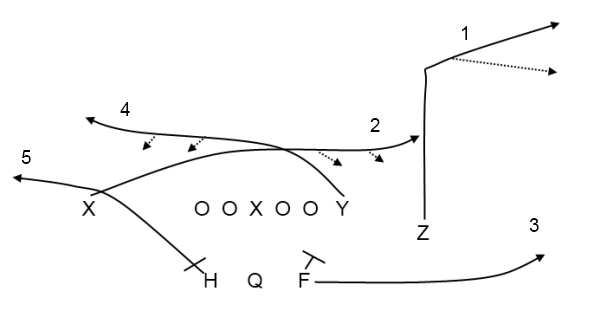
For those of you not familiar with the stem or “stemming a route”, Tim Gardner gives a brief overview.  The main objective of the stem is to force the defender playing single coverage to turn his hips in the opposite direction of the break.

There are several effective ways to perform a good stem. It depends on the route and the position of the opponent. This 1st-and-10 route by Landry at the top of the third quarter against Auburn is an interception that, at first glance, looks like an under-thrown pass.

And it is an under-thrown ball. Zach Mettenberger is delivering the ball from a constricted pocket and cannot get the ball to the location of the flat where Landry makes his break. The lower half of Mettenberger’s frame doesn’t have any follow through during the release. See below (there’s also a good replay following the queued video segment).

[youtube=http://www.youtube.com/watch?v=m1GECUhSgiU&start=103&w=560&h=315]

However, there’s more to this play than a short throw. Landry could have done more to ensure that he makes this catch regardless of Mettenberger’s ability to deliver a ball with greater depth on this break and it all has to do with his stem.

Landry is the slot right receiver with the corner playing nine yards off at the hash and directly over the receiver. The route Landry is running is essentially an out to the right flat where he works back to the ball, but the corner undercuts the play from trail position.

The reason the corner is in position to make this play has more to do with Landry’s route than Mettenberger’s throw. Landry begins the route with the cornerback playing an inside shade (see below).

LandryA1

The corner is already in position to anticipate an outside-breaking route. His hips are angled to anticipate his outside break and he’s playing off Landry to the point that he can be patient with the route while keeping an eye on the quarterback.

Landry understands that to beat a cornerback in this position, he’ll need to get the defender to turn his hips to the inside. However, the receiver lacks the patience to do it.

At the top of his stem, Landry executes a jab-step to the inside and then breaks outside. The problem is that Landry’s stem is five yards too short for this route. 

LandryA2

The reason we know this stem is too short is where Landry finishes his break (black line). The receiver makes a jab-step inside and then drifts outside to cross the first-down marker before bending his break towards the quarterback. Landry’s route is a long, looping, inefficient path that tips off the cornerback.

One of the best ways to test the patience of a patient cornerback is what you might call “playing chicken.” In other words, the receiver maintains a straight path as if he’s going to run up the corner’s hind parts.

Force the corner to turn or get close enough that when the jab-step is made inside, the corner has no choice but react. That’s selling a route.

The benefit of this longer stem is that the route has more natural depth without tipping off the break and the quarterback doesn’t have to wait a tick longer to throw the ball with greater width-depth. Note the lack of a defined angle in Landry’s break and how he drifts to reach depth.

LandryA3

The cornerback’s hips are already in position to break under Landry. Meanwhile, the receiver is just beginning to round his hips into position to come back to the ball. The hip position tells a lot of this story.

LandryA4

LandryA5

LandryA6

Although Mettenberger hangs the throw, a better route prevents this type of target in the first place. The entire pitch-catch process lacks precision on this play, but the root of the imprecision is on Landry. 

LandryA7

Athleticism is pretty. It’s also necessary. But it doesn’t achieve consistency without fundamental technique.

For analysis of skill players in this year’s draft class, download the 2014 Rookie Scouting Portfolio available April 1. Better yet, if you’re a fantasy owner the 56-page Post-Draft Add-on comes with the 2014 RSP at no additional charge and available for download within a week after the NFL Draft. Best, yet, 10 percent of every sale is donated to Darkness to Light to combat sexual abuse. You can purchase past editions of the Rookie Scouting Portfolio for just $9.95 apiece.
Futures: Louisville S Calvin Pryor

What does this two-time All-Pro have in common with Calvin Pryor. Ask their DB coach. Photo by Dave Blog.
What does this two-time All-Pro have in common with Calvin Pryor? Ask their DB coach. Photo by Dave Blog.

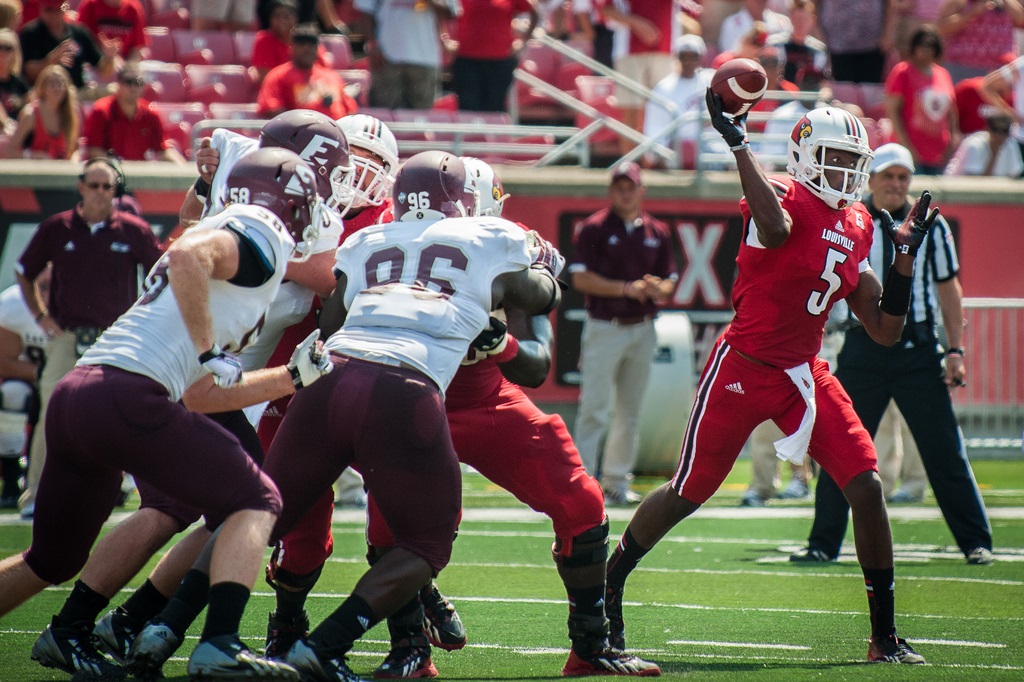
When it’s all said and done, Teddy Bridgewater might not be the best Louisville player in this draft.

Futures: Louisville S Calvin Pryor

By Matt Waldman

One of my favorite football players during the past 15 years began his college career as a corner, but finished it playing both safety positions and earned a first-team All-America selection. The 39th overall pick in the 2000 NFL Draft, he started all 16 games a rookie. Although he lost the Defensive Rookie of the Year Award to teammate Brian Urlacher, the linebacker often said that it was Mike Brown who was the true leader of the Bears’ vaunted defense.

Brown will turn 36 tomorrow. Due to a series of leg injuries, the two-time All-Pro didn’t have career longevity that will earn his former teammate Urlacher a good shot at the Hall of Fame. However, Brown had all the tools of a fine NFL pro: intensity, intelligence, and the versatility to play in the box or patrol the deepest outposts of the passing game.

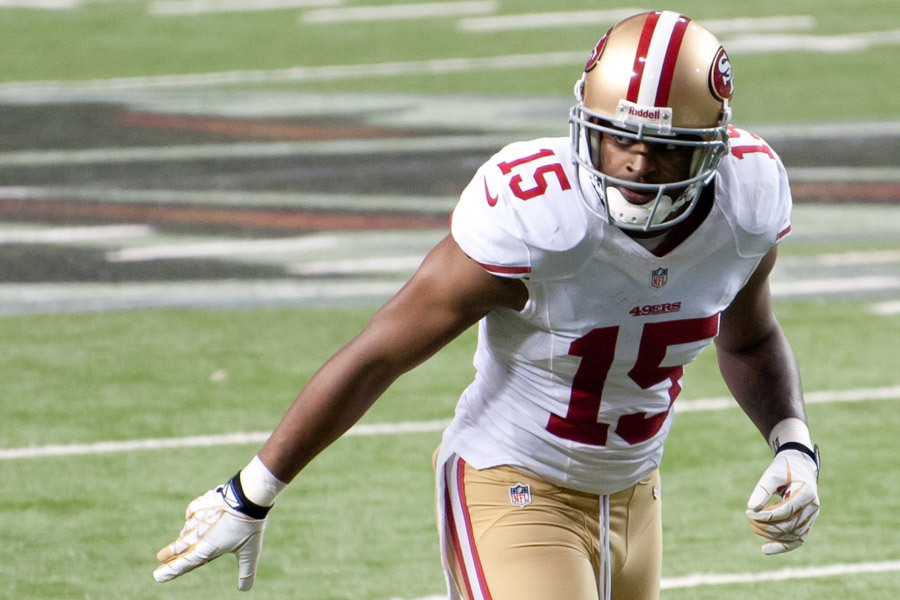
So when a player earns a comparison to Brown, it gets my attention. Current Texas defensive coordinator Vance Bedford was Brown’s position coach from 2000-2004. Before Bedford moved with Charlie Strong to Austin, he was the defensive coordinator at Louisville working with junior safety Calvin Pryor, a player Bedford compares favorably to the former Bear.

“He had three games in a row where he hit somebody and they did not finish the game,” Bedford told the Milwaukee Journal Sentinel. “He doesn’t want to injury anybody, but he brings a certain physicality that if you’re going to throw the ball down the middle of the field, you’re going to pay a price . . . Calvin Pryor reminds me of a bigger Mike Brown . . . [Brown] was a coach on the field . . . That’s what makes great players. Understanding the entire defense. Calvin Pryor is a lot like that.”

I read this quote from Bradford after watching the six-foot-two-inch Pryor against Central Florida, Rutgers, and Connecticut. A colleague of mine recommended I watch Pryor in September and I’m late to the draftnik party. However, I understand why there are teams that have Pryor ranked higher than Alabama’s Ha Ha Clinton-Dix.

The asset I value the most from Pryor’s game is aggression. He treads the fine line between disruption and recklessness, which can scare some evaluators.

However, good safeties take great angles in a hurry. It’s a skill rooted in confidence and belief of what the player sees on the field.

With notable exceptions where a player demonstrates a lack of overall football intelligence, I prefer an aggressive player with diagnostic skills that a coach can refine than a player that sees valuable keys but doesn’t trust his eyes. When considering the past path towards assertive play, I’d pick aggression over passivity as a football player’s behavioral baseline a majority of the time.

Read the rest at Football Outsiders

Reads Listens Views 2/7/2014

This Week’s RLV: Driving Blind, Mr. Clean, Talent On The Fringe, The Price Of Free, And Militant Frogs

Views – “Driving Blind” A Film By Brian James Griffo

[vimeo 49946741 w=500 h=281]

Brian James Griffo asked me to check out his trailer and tell everyone that proceeds from the movie (rent for $4.99/buy for $8.99) are going to research. I’ll be If you’ve done a road trip to see the country or a country that lasts more than 10 days then you know how life-changing these adventures can be. I did one 21 years ago across the U.S. in a van. It was one of the great experiences of my life.

I haven’t seen the full movie, but I just bought it based on what I’ve seen and what I gained from my road trip. Learn more here.

Listens – Brad Mehldau

[youtube=http://youtu.be/cnH27mxW0KM]

Welcome

If you’re new to the Rookie Scouting Portfolio blog, welcome. Every Friday, I post links to things I’m checking out when I’m online. You may not like everything listed here, but you’re bound to like something. It’s also my chance to thank you for reading my work and encourage you to follow the RSP blog and buy the Rookie Scouting Portfolio publication.

For those of you new to the Rookie Scouting Portfolio, the publication is available every April 1. You can learn more about the RSP here. If you want to see samples of the play-by-play notes I take to write the analysis, you can find them here. And to download past versions of the publication (2006-2012), go here.

This month through February 10, I’m offering an early bird discount to those who pre-order the RSP. For those of you calendar challenged like me, that’s this Monday . . .

In addition to the RSP and  the post-draft publication that comes with it a week after the NFL Draft, 10 percent of each sale is donated to Darkness to Light. This organization is a non-profit devoted to preventing and addressing sexual abuse through community training in schools, religious groups, and a variety of civic groups across the U.S.

Here is what the RSP donated to D2L this year. According to D2L, the RSP’s 2013 donation amount was enough to train 250 adults in communities across the country.

In Case You Missed It/What’s Ahead at The RSP Blog

Sorry, but there aren't any "Steve Smith's" in this 2014 Draft Class. Photo by PDA Photo
Sorry, but there aren’t any “Steve Smith’s” in this 2014 Draft Class. Photo by PDA Photo
  • Talents On The Fringe: RB Shakir Bell – Every draft has a handful of players where the talent is there, but they don’t register on the draft media’s radar. Bell is one of them. Find out why.
  • Futures: WR Brandin Cooks vs. CB Ifo Ekpre-Olumu – Cooks is getting a lot of love, but I think this match up provides some sobering critiques of a good prospect who doesn’t deserve the Steve Smith comparisons at this time. And if you’re a fan of defenese, Ekpre-Olumu deserves your attention. This article is just as much about him as it is Cooks.
  • Six Plays That Make Me A Fan Of WR Odell Beckham’s Game – A lot of Tweets from people telling me Beckham is their No.2 WR in their class. Some comp him to Antonio Brown. I’m more inclined to say Greg Jennings-Isaac Bruce-Tim Brown. Stylistically, all four have enough similarities that it’s not a major debate.
  • Boiler Room: QB Johnny Manziel And Why I Think Of Ali – Manziel isn’t as haphazard a player and reckless as you think. His techniques are unique, but they are techniques. It was the same with boxing legend Muhammad Ali. Learn about the parallels between them.
  • Coming Soon: No-Huddle Series: Cal TE Richard Rodgers- Lots of promise, but can he fulfill it?
  • Coming Soon: WR Kelvin Benjamin Analysis – I haven’t decided whether this will be a Futures column or analysis entirely on this blog. Stay tuned.
  • Coming Soon: RB Kapri Bibbs and the difference between “college good” and “NFL good.”
  • Coming Soon RSPWP3 – There won’t be a draft this year, but the team building/management angle will be a compelling exercise for our participants.

Reads (Football)

Reads (Non-Football)

Views – Sony World Photography Awards 

Click the link above for the rest – Photo above by Nicolas Reusens.

Listens – “Mr. Clean”

[youtube=http://youtu.be/89kZOESeims]

A Freddie Hubbard tune performed by Roy Hargrove and company. I’ve been listening to this version on constant rotation in my car all week.

Six Plays That Make Me A Fan Of WR Odell Beckham’s Game

Odell Beckham's versatility isn't just about his special teams play. Photo by Crawford Orthodontics.
Odell Beckham’s versatility isn’t just about his special teams play. Photo by Crawford Orthodontics.

Some schools are known for producing good athletes whose games don’t translate to the NFL. LSU’s Beckham doesn’t fit that pattern.

Craig “Buster” Davis. Devery Henderson. Early Doucet. Brandon LaFell. Terrence Tolliver. These five receivers were good college players at LSU who failed to develop into productive starters that an NFL team feels it’s “set” at that spot in its lineup. Dwayne Bowe (and it was shaky for a bit) and Rueben Randle are the two exceptions in recent years.

Despite the fact that LSU has a history of recruiting great athletes whose physical skills tempt scouts and NFL personnel directors into selecting them only to earn a lower return on investment than they hoped, it’s never a good idea to write off a program or a group of players based on this recent trend. Every player is different – even if the trend seems to be strong.

It’s important to examine each player as an individual and not let past players from that program influence the decision-making process. Otherwise, evaluators can fall into the trap of following the back end of trends, which is a lot like following the back-end of a horse.

LSU’s starting receivers are two prospects that I like this year – especially Odell Beckham. The 6’0″, 187-pound junior may lack the prototypical height and weight of an NFL primary receiver, but he plays big and he’s versatile. Here are six plays that do a good job highlighting Beckham’s game at this stage of his career.

No.1 – Beckham Is A Football Player First, Receiver Second.

If I was a head coach, personnel director, general manager, or owner of a team, one of the first qualities I would demand of my players is a comfort level with physical play. Julius Thomas is a physical freak at eight end, but his reputation – fair or not – is that he doesn’t respond well to physical play. On the other hand, Hines Ward was a Timex.

I haven’t seen Beckham make or take any Ward-like hits, but a running theme throughout his game is the willingness to engage in the physical side of the game. Here’s the first play of the LSU-TCU game. Beckham is at the top of the formation between the left hash and left flat with the cornerback playing a yard off on this run play to the receiver’s side.

[youtube http://www.youtube.com/watch?v=b_M52KgXSJ8&start=01&w=560&h=315]

The fact that LSU is comfortable running to Beckham’s side in a 21 personnel 1×1 receivers set is a testament to Beckham as a run blocker. Beckham delivers an excellent punch with good hand placement. He integrates his hand use and leg drive to shove his opponent off the line of scrimmage.

It’s not a perfect block – Beckham over-extends his form during the block and allows the cornerback to turn outside and get up field. The receiver manages to counter with a shove that prevents the defensive back from reaching the runner.

If a player is going to make an error in the run game, I’d rather him be too eager to get physical than not eager enough. Beckham fits the bill.

No.2 – Beckham’s Game Has Layers

A kick or punt return can tell an evaluator a lot about a player’s style as a ball carrier. This return against TCU with 13:26 in the half tells me that Beckham’s running style is confident, intelligent, agile, explosive, and physical.

[youtube http://www.youtube.com/watch?v=b_M52KgXSJ8&start=155&w=560&h=315]

Beckham takes this kick seven yards deep in the end zone. The fact that there’s no hesitation about running this out is a positive. He’s confident in what he sees as well as his ability to execute.

I like that he sets up his first move by bending the run inside the right hash to the five to set up the wall of three blockers ahead. This is much like a running back pressing and cutting back. Beckham’s cut back is sharp enough to get outside the wall and force the unblocked defender coming up the sideline to take a bad angle.

Beckham then layers moves to get outside a defender coming over top at the 20. First, it’s a hop-step inside and followed with a break to the outside. These moves get Beckham to the 20 and then to the 25.

The receiver throws another combination of moves into the run, executing a stutter-step to set up a swat of the inside pursuit with this left arm that takes the defender to the ground. Like the block, Beckham is the player attacking and not being attacked.  He finishes the play lowering his pads into a defender and continues forward another three yards.

Beckham’s ability to layer confidence, savvy, agility, and physicality into his game makes him the type of player I can use all over the field: the end-around, screens, special teams, and traditional timing routes.

No.3 – Patience and Explosion

This is a simple-looking post route that Beckham catches for a 42-yard gain against TCU on 1st and 10 with 0:16 in the first quarter as the outside twin man on a strong side twin I formation set. Both receivers are running posts on this play.

[youtube http://www.youtube.com/watch?v=b_M52KgXSJ8&start=125&w=560&h=315]

What I like about his play is Beckham’s patience. Watch the replay and you’ll see that he runs a long stem and continues his trajectory towards the cornerback. There’s no real set-up with movement to try to get the defender to bite. Beckham knows this corner is patient and not biting because he’s playing six yards off with no safety help.

The receiver maintains his path that will eventually force the defender to give up the inside or collide with Beckham. Late in the stem, the defender blinks just enough for Beckham to break inside.

This straight path that Beckham takes a nice sign of good speed that he can run a true linear route and earn separation without a head fake, stutter or dip. If not for an under-thrown ball, Beckham had the separation to run under this pass for a touchdown.

Beckham has to wait on the ball, but he still manages to make the catch with his hands and maintain possession with the corner wrapped around his waist. Winning against tight coverage is also a recurring theme for Beckham – another sign that he’s comfortable with physical play.

No.4 – Attacking Early

The last play was a good example of Beckham displaying patience as a route runner. This play illustrates that Beckham can win early and do so with an integration of physicality and agility. This is a 1st and 10 with 8:39 in the half from a 21-personnel, 1×1 receiver I-formation set at the 45 of LSU. The TCU cornerback is a yard of the line of scrimmage. Beckham is a yard behind the line in the left flat between the hash and the numbers.

[youtube http://www.youtube.com/watch?v=b_M52KgXSJ8&start=178&w=560&h=315]

When a receiver lines up 3-4 yards behind the line of scrimmage on a consistent basis, it’s a good indication that the offense is trying to prevent that player from getting pressed because they don’t have confidence in his skills to win early. Beckham is just a yard off the line and he uses that space to dictate the action.

He executes a strong stutter-step and pairs it with his outside arm to rip past the corner back, earning two yards of separation on the man within the first five yards of the release from the line of scrimmage. That’s a lot of space for a receiver to earn this early in a route. Austin Collie was fantastic at doing this at BYU and before his rash of injuries with the Colts.

I bet Beckham will display similar initial quickness and more top-end speed. On this play, the receiver is wide open but quarterback Zach Mettenberger once again under-throws the target.

The pass is a 49-yard throw from pitch to catch, but needed to be 50-52 yards in length for Beckham to run under it with his back to the defender. Instead, Beckham has to wait on the ball, the corner back recovers, and Beckham loses concentration, trying to turn up field before he has fully secured the target.

The ball bounces off Beckham’s hands, and the corner arrives just in time to pry the receiver’s arms away from any second-effort attempt. The end result is a negative, but I’ve seen enough plays where Beckham makes these types of catches – including more difficult ones – that it doesn’t outstrip the positive of this wide receiver’s skill to earn separation early in a route.

A play like this tells me that Beckham can help a team in a short timing game with heavy west coast principles or a vertical game that relies on a lot of play action. His versatility as a receiver is just as important as his versatility as a football player.

No.5 –  Playing Big

Earlier this year, I profiled Jordy Nelson’s ability to frame separation with a defensive back. Beckham flashes similar technique on this 2nd-and-11 pass with 2:36 in the half from a 1×1 receiver, 21 personnel I-formation set as the single receiver on the left side. Once again he’s a yard behind the line of scrimmage with the cornerback playing three yards off with outside shade.

[youtube http://www.youtube.com/watch?v=b_M52KgXSJ8&start=240&w=560&h=315]

At the top of his stem, Beckham takes a hard step into the body of the defender, frames separation with his hands, and then makes a quick break outside. I love how he comes back to the ball, attacking the target with a leaping catch at the sideline while the defender wraps him.

The hand strength to maintain possession on this play is impressive as is keeping both feet in bounds. This is an example why the dropped-post pattern is a “concentration drop.” Too many of these, and it’s a problematic thing for a receiver’s evaluation. However, in the context of what else I’ve seen – like this play – it’s not a concern.

No.6 – Varying The Storyline

In this game alone Beckham has attacked early, remained patient and kept it simple, and attacked late. This route is an example of Beckham using yet another press technique on a route further highlights his athleticism and concentration: the fade-stop.

[youtube http://www.youtube.com/watch?v=b_M52KgXSJ8&start=490&w=560&h=315]

Beckham is the single receiver at the numbers of the left side of the field facing a cornerback playing four yards off with inside shade and a safety 10 yards deep and just inside the left hash. I like the swim move to break outside and get an early step on the cornerback, baiting the defender to consider a deeper route before breaking back to the ball.

Beckham once again makes the reception after sustaining some contact from the defender. Like Greg Jennings, Isaac Bruce, or Tim Brown, Beckham is an average-size receiver who possesses the athleticism, toughness, technique, and savvy to play bigger than his measurements.

It’s why he’s a favorite of mine in this draft class even if his alumni haven’t shined as brightly in the NFL as some anticipated.

For analysis of skill players in this year’s draft class, download the 2014 Rookie Scouting Portfolio.The 2014 RSP will available April 1 and if you pre-order before February 10, you get a 10 percent discount. Better yet, if you’re a fantasy owner the 56-page Post-Draft Add-on comes with the 2012 – 2014 RSPs at no additional charge and available for download within a week after the NFL Draft. Best, yet, 10 percent of every sale is donated to Darkness to Light to combat sexual abuse. You can purchase past editions of the Rookie Scouting Portfolio for just $9.95 apiece.

Reads Listens Views 1/31/14

If you bought the 2013 RSP, you knew about UDFA Marlon Brown. It's these types of bargains that make it a fantasy drafter's fave. Photo by Paul M Gardner.
If you bought the 2013 RSP, you knew about UDFA Marlon Brown. It’s these types of bargains that make it a fantasy drafter’s fave. Photo by Paul M Gardner.

This Week’s RLV: A pro scout’s take of the Super Bowl, RSPWP3, Snowjobs, Danny Barker, and The Staple Singers.  

Welcome

If you’re new to the Rookie Scouting Portfolio blog, welcome. Every Friday, I post links to things I’m checking out when I’m online. You may not like everything listed here, but you’re bound to like something. It’s also my chance to thank you for reading my work and encourage you to follow the RSP blog and buy the Rookie Scouting Portfolio publication.

For those of you new to the Rookie Scouting Portfolio, the publication is available every April 1. You can learn more about the RSP here. If you want to see samples of the play-by-play notes I take to write the analysis, you can find them here. And to download past versions of the publication (2006-2012), go here.

This month through February 10, I’m offering an early bird discount to those who pre-order the RSP.

In addition to the RSP and  the post-draft publication that comes with it a week after the NFL Draft, 10 percent of each sale is donated to Darkness to Light. This organization is a non-profit devoted to preventing and addressing sexual abuse through community training in schools, religious groups, and a variety of civic groups across the U.S.

Here is what the RSP donated to D2L this year. According to D2L, the RSP’s 2013 donation amount was enough to train 250 adults in communities across the country.

RSP Writers Project (RSPWP)

Marshawn Lynch. Photo by Matt McGhee.
Marshawn Lynch is on one of my RSPWP1 squads and management contributed a percentage of the weekly media fines on his behalf. Was is the RSPWP? See below. Photo by Matt McGhee.

The RSP Writers Project is an event I’ve hosted for two years at this blog that features football writers from around the country engaged in an exercise designed to make these scribes and readers think about the complexities of the game in a different light. RSPWP1 was a team-building exercise where we assembled teams with a salary cap (try it yourself by downloading the spreadsheet here) and presented these squads with posts that discussed our player-personnel choices and strategic philosophy for the offensive and defensive units.

Here is one of my two teams with a post that discusses the roster and a second post that presents the strategic philosophy through a Q&A format.

RSPWP2 was a 32-team draft with over 20 rounds held on Twitter (#RSPWP2) and draft commentary hosted here.  In recent weeks, I’ve had more than a few writers ask me if there will be an RSPWP3. The answer is yes.

And in the spirit of the RSPWP, the third incarnation of this exercise will take a different approach. The RSPWP3 writers will inherit teams with a specific set of personnel, conditions, and circumstances. Their job will be to present a three-year strategic plan to ownership.

Each owner will present their plan as a post on the RSP blog. Readers will be given access to each team well before the presentations are made so they can play at home.  More details soon.

If you participated in RSPWP1 and/or RSPWP2 and you wish to be a part of RSPWP3, you can drop me a line or wait for me to contact you sometime in February.

Listens

[youtube=http://youtu.be/CqwCriy2Vqo]

In Case You Missed It and What’s Also Ahead at The RSP Blog

The blur is the rising draft stock many project for Kelvin Benjamin. Find out if I feel he warrants it. Photo by Kathy Vitulano.
  • Futures: Teddy Bridgewater – The darling of the Twitter football writer scene gets the RSP treatment.
  • Sr. Bowl WR Technique Roundtable – Five wideouts discuss five techniques important to their craft.
  • Boiler Room: Arizona State RB Marion Grice – Not the most physically talented of the 2014 RB class, but man do I love how he plays football.
  • Blake Bortles Analysis vs. South Carolina -Want the goods on this UCF QB? Facing the Gamecocks’ defense is a good way to get it.
  • Coming Soon: No-Huddle Series: Cal TE Richard Rodgers- Lots of promise, but can he fulfill it?
  • Coming Soon: WR Kelvin Benjamin Analysis – I haven’t decided whether this will be a Futures column or analysis entirely on this blog. Stay tuned.
  • Coming Soon: RB Kapri Bibbs and the difference between “college good” and “NFL good.”

Listens

[youtube=http://youtu.be/R6dp9_fK3Rc]

Woody Shaw and Joe Farrell playing a fast blues. I could think of far worse things to do than listen this on a Friday.

Reads (Football)

Views

"Snow" Jordan . . . works for me.
“Snow” Jordan . . . works for me. Photographer Unknown.

Super Bowl Thoughts

Someone I talk with on occasion has experience as a pro scout and we broached the topic of the Super Bowl this week. I’m sharing some of his thoughts because I think they provide some nuances about this game that many of you will enjoy.

One Seattle’s Cover 1 – Cover 3 Defense 

There is some oversimplification with the way some writers are describing this defense as straight forward, in-your-face/try-and-beat-us, scheme. Yes, they primarily run Cover 1 and Cover 3, but there are a truck-load of subtle differences up front . . . there’s a lot of subtlety.

What Seattle’s Style of Defense Can Do Against Peyton Manning

A Mesh Play is often known as a rub route or pick play, which the Broncos have executed with great success in the red zone. Photo from Smart Football’s website.

People tend to focus on blitzing and splash plays when they discuss defending Manning, but it’s the subtle things like knowing when Manning wants to hit an “under” or a mesh and taking it away.

Some of the best film on a team hemming in Manning this season was Week 6 against Jacksonville, who basically cloned Seattle’s system. They forced Manning to repeatedly play it safe and Manning was impatient. They wouldn’t give him anything, but short stuff. They played a lot of two-high and also pressed the receivers often.

Take away all of Manning’s favorite plays and a team can hammer the Broncos on levels early and only let him have the shallow under. Jacksonville wouldn’t let Manning have a corner route on the smash concept – only the smash. They also took away the seam route to Julius Thomas and played some Tampa 2 on downs where they noted a tendency for Manning to throw the seam.

They also made Manning check down to the running back on 3 and 4-verticals. Eventually he got frustrated and tried to force a seam route that Paul Posluszny turned into a pick-six. However the Jaguars didn’t have a guy on defense who could do what Earl Thomas does, which means they had to play more Cover 2

Seattle will also have its defensive tackles squat and get its hands up in passing lanes on downs where the team has spotted tendencies for specific throw.  The Seahawks will have a set of these subtle things in its game plan to force Manning to settle for routes he doesn’t want to throw.

By taking away his deeper options, he’ll hold the ball more too. When he gets it out fast, he’s pretty much a machine. What should worry Seattle fans is how good Manning is at finding the X & Z Curl versus Cover 3. They have to throw a wrench in to that.

What about hitting Manning? I thought Seattle got decent pressure on him in the preseason . . . 

Hitting him is key, too . . . . not even knockout hits; just hit Manning every play. He got the crap knocked out of him in that Jaguars game.

Seattle will press the hell out of Denver, too. It might cost them if Demaryius Thomas can get into Richard Sherman’s head. I’m not sure Thomas has the mental toughness to win that match-up though; Sherman is a driven man. Thomas has had an efficient playoff run so far, but he’ll have to man-up and beat press play after play.

Prediction?

I can’t see Seattle winning with Russell Wilson throwing the ball 30-plus times. The Seahawks defense needs to cripple the Denver offense and turn the game into a defensive slug fest and battle for field position. Ultimately, I think it ends up like Denver’s other two playoff games – 27-17ish.

Reads (Non-Football)

  • How 2 inches of snow created a traffic nightmare in Atlanta – When I came to Atlanta in the 1980s, the racist joke I often heard about MARTA – the city’s transit system  – was that it stood for “Moving Africans Rapidly Through Atlanta.”  Well folks, this storm is part of the unintended consequences of a city that didn’t want to invest in its mass transit as a top priority. A previous generation of Atlantans afraid of black people moving to suburbia in the 1970s and 1980s helped create this nightmare for a city now known as the “Black Mecca.” Ain’t that something . . .
  • The Government Is Using Data From Your Apps to Map Your Political Alignment – Just another demographic study to benefit Corporate America.
  • Annotation Tuesday! Buzz Bissinger’s “The Killing Trial”   – Courtesy of Alen Dumonjic, who sent this to me in a private message. I’m putting it here as a way to save it for future reading.
  • Why Do The Super-Rich Keep Comparing Obama To Hitler? If you ask me, their plan to impede the service capabilities of MARTA and other mass transit authorities didn’t work out so they’re now at DEFCON 2.
  • Death-Bed Confessions of William Butler Yeats – The author writes “If a man like that could look back on a lifetime of accomplishments and chalk them up to empty vanity, what hope is there for everyone else?” I think the author doesn’t get the fact that if a man like that can be this self-critical, that it’s best not to take life and work too seriously. But that’s just me . . . what do I know?

Listens

[youtube=http://youtu.be/-1pYKdqD1ls]

Futures at Football Outsiders: What’s After Clowney?

I think this would be a good tattoo for Jadeveon Clowney. Photo by ToteMoon.
Is there anything left at the defensive end position after Clowney makes his draft impact? Photo by ToteMoon.

by Matt Waldman

Jadeveon Clowney is one of the headliners of the 2014 NFL Draft, but defensive end is not this year’s marquee position. One of the predominant reasons is the current prevalence of the 3-4 scheme in the NFL. A true 4-3 end capable of stopping the run and pressuring the quarterback at an equally high level has always been a rarity. While it’s possible that a team with a 3-4 scheme drafts Clowney and converts him to outside linebacker, the fact that the South Carolina defensive end has the potential to develop into a superstar 4-3 end is enough for him to earn top-five consideration in any draft class.

Remove Jadeveon Clowney from the equation and this class of defensive end prospects is not an exciting one. However, the NFL isn’t comprised solely of superstars. Teams still derive value from players that do one thing well. The popularity of the 3-4 defense, plus 2-to-3 years of development time, could make several of these defensive end prospects valuable contributors.

The names I’ve seen at the top of most draftniks’ lists lack the all-around game required of a 4-3 end. Most of these players will have to make some kind of switch. Some will move from defensive end to outside linebacker, others will become 3-4 ends, and a few might earn a shot at 4-3 defensive tackle. With time, some of these players have the potential to help an NFL defense -– and a few may even blossom into viable 4-3 ends.

This week, I’m not profiling any of the defensive end prospects that I believe an NFL team will convert to outside linebacker. This is strictly a list of potential 4-3 and 3-4 ends. Here are my thoughts on five of these future rookies. One of them is not high on many lists, but he has the potential to develop into a quality 3-4 end.

Read the rest at Football Outsiders

Sr. Bowl WR Technique Roundtable

Norris' first skill player for Joe Flacco is a youngish, Boldin-ish receiver in Michael Crabtree. Photo by Football Schedule.
Among the seven players I interviewed Monday night at the Reese’s Senior Bowl, five of them mentioned Michael Crabtree as one of their two favorite players – including a running back. The most common answer why? “He’s smooth.” Find out how the five WRs below are trying to make their games smooth. Photo by Football Schedule.

Five Senior Bowl wide receivers talked with Matt Waldman and provided helpful tips behind the techniques of playing their position.

RSP: Cody, tell us about your development transitioning from high school to college.

Cody Hoffman: In high school, we didn’t even have a receiver’s coach. When I got to BYU I worked on route running and the technique of getting in and out of routes. I have always tried to have an emphasis of working on press coverage. It’s nice to be able to work on it out here with a receivers coach and against some good DBs.

RSP: Kevin, what is your technique focus in Mobile this week?

Kevin Norwood: Getting off press a little better and getting my footwork right. The Jaguars receiver coach is teaching me something I can use to get open more and to beat pressure more, which is to stand on the balls of my feet, which helps me be quick on my feet.

Shaq Evans: Playing on the balls of your feet is how you keep your base. If you’re on your heels you’re going to slip and fall. You’re also not going to get out of cuts very well. It’s why they always want us out with our heads over our toes and on the balls of our feet. When you do those things you can make really accelerate out of your cuts.

RSP: A lot of receivers at this stage of their development entering the NFL possess 1-2 refined moves to beat press with either their feet or with their hands, but they lack the skill to integrate the hands and the feet together or demonstrate variety.

Shaq Evans: It’s something that progresses over the years. Like you said, at first I was just using my feet or just trying to win using my hands. But these last two years I felt like I’ve put them both together, especially this year.

Robert Herron: You also have to mix it up. Like coming off slow and then use a sudden move to keep them guessing. But you always want to attack them. You don’t just want to do a move at the same way at the same spot because they can just sit there and then you have to change direction into the man [and you’re back at the same point you started]. You want to attack him and make him feel uncomfortable [about what you’re going to do next].

Ryan Grant: You want to have a bag of tricks and I try to use one of at least three types of releases coming off the line. If he’s outside, then I’m going to try to give him something outside to think about and if he’s inside I’m going to do something inside and if he’s heads-up, I’m going to take a step at him to freeze him.

RSP: Is there something that you see from a defensive back that tells you what techniques you should be using when you line up against them on a given play?

Evans: Yeah, definitely. If the corner is a guy that [doesn’t play as aggressive] I like to take the line of scrimmage back to him and quick-set him. If the guy plays really physical then I want to do something really quick with my hands first before he gets his hands on me. That way I can get past his hips. Once you get past a defender’s hips and it’s hard for him to recover. Watching how a corner plays in press coverage is one of the main things I watch on film.

RSP: What are some things that you’re working on past the stage of the initial release?

Evans: Making sure that I’m always going vertical. When you get a DB’s hips to turn down field you have him because you can break in any direction or stop. Whenever you get to the top of your route you always want to have his hips turned towards the end zone. Once you get his hips turned towards the end zone your always have him beat.

RSP: Talk about the difference in mindset and action for a receiver when he’s facing zone coverage instead of man coverage.

Herron: It’s the timing and knowing where the other players are and against man, you only have to get open against one dude. With zone you have to know where the inside dude is and adjust your route off him. When you come out of your break you either have to see where he is or know where he’ll be. You might be running an out route against zone and settle into a spot after your break because the corner could be sitting where you’re headed.

[youtube=http://www.youtube.com/watch?v=CDHrdSZwVug&start=24&w=560&h=315]

RSP: Would it be accurate to say that routes against man coverage is like telling a story to the defender that you want him to believe whereas versus zone you’re reacting to your opponents’ stories and trying to find what he’s hiding from you fast.

Herron: It is like that, but with both you still want to make them do what you want them to do. It’s just with zone you have to adjust to what they’re doing.

RSP: In man you dictate, in zone they dictate . . .

Herron: Yeah.

RSP: Is there anybody you faced during your career whose game you really respect?

Evans: D.J. Hayden from Houston who was the 12th pick overall with the Oakland Raiders last year is a really good corner who I faced my junior year. He was a tough player to go against, I’m not going to lie. He was very patient as well as strong and fast. You had to be more patient than him and get physical. He helped me raise my game because I realized that I had to become a more physical receiver.

RSP: Facing a patient corner is a difficult challenge for receivers because there’s an expectation of when a receiver thinks he’ll get his opponent to bite on a route. When that time doesn’t arrive . . .

Evans: It’s tough. When a corner is that patient and moves his feet well and uses his hands well you have to be able to knock him off his spot or use your hands to rip through.

Grant: If he’s patient you have to make him move his feet. You attack the foot that he doesn’t want to move and make him move it. If he’s head-up you probably want to make him move that inside foot. If he’s outside then you want to make him move that outside foot.

RSP: Let’s move on to making the catch. How important is it to attack the ball at the earliest window within your range to make contact with the ball?

[youtube=http://www.youtube.com/watch?v=TL6TYGjj2XA&start=285&w=560&h=315]

Grant: At first, I wasn’t that good at attacking the ball in the air when I came to Tulane. But my coaches told me that I had to be hungry for the ball and attack it.  You want to catch the ball at its earliest and highest point that you can reach. You want to always be going up early, going up strong, and taking it away. If you do those things you’ll be fine.

Herron: It’s big! If I were to give anyone advice it’s that you have to snap your head and hands to the quarterback as soon as you get out of your route. It was something that I had to learn over the years. You want to almost see him throw the ball. If not, you want to see the ball just out of his hand or else it’s more difficult to find the ball in the air.

RSP: It sounds like something so simple to do, but when you have a helmet on and you’re trying to snap your head around it can have a discombobulating effect on your vision. Is there a hint or tip on doing this well?

Herron: You want to locate the “X” of the football (the point where the seams intersect) and watch it all the way until it lands in your hands. Because the ball is spinning you can’t always see the outside of the ball. In college there’s a strip on the ball, but there’s no stripe on the NFL ball.

[youtube=http://www.youtube.com/watch?v=HlygLcdCoOU&w=560&h=315]

RSP: When it comes to catching the ball where on your hands do you want to make the reception?

Grant: On your fingertips. I don’t want the ball on the palms of my hands. When that happens it bounces off hard.

For analysis of skill players in this year’s draft class, download the 2013 Rookie Scouting Portfolio.The 2014 RSP will available April 1 and if you pre-order before February 10, you get a 10 percent discount. Better yet, if you’re a fantasy owner the 56-page Post-Draft Add-on comes with the 2012 – 2014 RSPs at no additional charge and available for download within a week after the NFL Draft. Best, yet, 10 percent of every sale is donated to Darkness to Light to combat sexual abuse. You can purchase past editions of the Rookie Scouting Portfolio for just $9.95 apiece.

Jene Bramel: Does the Reese’s Senior Bowl Put Edge Rushers In Position to Succeed?

Kyle Van Noy epitomizes the glut of rushers that aren't an easy fit for the current specifications of 4-3 defenses seen at the Senior Bowl. Photo by Ken Lund.
Kyle Van Noy epitomizes the glut of rushers that aren’t an easy fit for the current specifications of 4-3 defenses seen at the Senior Bowl. Photo by Ken Lund.

Players may be more scheme diverse than ever before, but short practice schedules and a traditional mindset may limit their ability to display their true upside at the Senior Bowl.

By Jene Bramel

The NFL evolves quickly. Decades ago, Jimmy Johnson’s preference for speed first and size second generated a new wave of defenders. Defensive ends looked like linebackers. Outside linebackers looked like safeties. Some defensive coordinators adapted immediately. So, too, eventually did old school defensive coordinators and fans, who began recognizing that 255 pound defensive ends and 230 pound inside linebackers weren’t liabilities in a base defensive package.

A similar transition started some years ago as many of the league’s best defensive minds began using a 1-gap, attacking 3-4 and hybrid fronts. Then, the default term for a pass rusher considered too slight to hold up as a down defensive lineman but too big to be successful in coverage was “tweener.” It was rare to find a “tweener” who was a dominating pass rusher from both two and three point stances and could also handle stand up linebacker responsibilities. That skill set is much more common today. Even those that do struggle to handle more traditional linebacker responsibilities are often adept at rushing the passer from either stance.

That’s made the term “tweener” obsolete. These players are now scheme diverse. They deserve to be called what they are – edge rushers – without forcing them into a given base defensive scheme. And in today’s NFL, those players are now prized commodities.

Here at the Senior Bowl, however, these players aren’t treated as such. Even worse, when too many are invited to the game, some are forced into a more traditional, base 4-3 strong side linebacker role. It may not necessarily hurt their draft stock, but it isn’t putting them in a position to succeed.

It wasn’t a major issue in recent years, as there was enough all-around outside linebacker talent in the ranks that each squad had a well-rounded group of defensive end and outside linebackers. The coaching staffs also did an admirable job of giving players like Courtney Upshaw, Cam Johnson, Sio Moore, Melvin Ingram, Ty Powell, Shea McClellin and others opportunity in multiple situations over the past two seasons. This year’s rosters seem more unbalanced, however. Many of the linebacker prospects – and some defensive end prospects – may not see many snaps in the roles they may be best suited for on Sundays.

The North squad is using Trent Murphy exclusively at defensive end. That’s likely a good decision. But Michael Sam and Marcus Smith would seem better fits in an edge rushing role than the strong side linebacker role they’re being used in currently. In Monday’s North practice, Sam and Smith saw just three pass rushing reps each in one-on-one drills and zero reps in team drills. Teams want to see both players in a new role, but they should be given an opportunity to show how their best skill holds up against Senior Bowl competition.

It’s even worse on the South roster, where there’s not a prototype middle linebacker on the roster. Instead, it’s a mix of flow-and-chase 4-3 outside linebacker talents and edge rushing prospects. That mix led to the Jacksonville coaching staff using Jerry Attaochu at inside linebacker for a handful of reps today, according to those who watched the South practice on Monday.

It’s early in the week and there are lots of practice reps yet to be taken. Tomorrow could be the day the coaches have planned to work Marcus Smith in heavily as a weak side end or use Attaochu exclusively in an edge rushing role. We could see a heavier installation of 4-3 Under concepts than in past seasons as the week progresses.

More likely, however, the limited practice time will prevent the coaching staffs from deviating from the early week plans. Unfortunately, that means the “tweeners” of the Senior Bowl experience may not get a chance to see how their best skill stacks up against elite college competition.

Under Phil Savage, the Senior Bowl has been more progressive and NFL-friendly over the past two seasons. It’s time to continue the trend on the field and find new ways to highlight this critical group of players.

Jene Bramel’s Reese’s Senior Bowl Defensive Practice Day 1 Notes

Borland was fundamentally strong and instinctive, but might not have one elite skill. Photo by Enrique Sanabria.

Jene Bramel posts his takes on the North squad’s front seven on the opening day of practice. 

By Jene Bramel

The first day of practice in Mobile is a transitional practice of sorts. Each NFL team that I’ve seen coach in Mobile runs their practice a little differently. Players that assimilate concepts in drills and installation work quickly and players with superior raw talent and technique stand out and draw rave reviews early. Players asked to do drills that may be just a little different than those they ran in college, who are learning a new position or who are now facing elevated competition for a full 90-minute period either do not draw any notice or are called disappointments.

Today was no exception on the defensive side of the ball.

I focused on the front seven today during the North practice, watching a mix of linebacker and defensive line drills and focusing on line play during the team sessions.

DT Aaron Donald, Pittsburgh: Without question, Donald was the most dominant player on the North defense today. Showing a mix of strong hands, a technically sound base and quick first step, Donald improved with each repetition. He was unblockable during 9-on-7 and team drills, including a stretch where he made Baylor’s Cyril Richardson look like a stationary heavy bag. Penetration is Donald’s game and today was a great start for the 288-pound defensive tackle. During team drills, Donald would have had at least three sacks had he been allowed to finish plays at the quarterback.

DT Ra’shede Hageman, Minnesota: Entering today, Hageman carried a higher consensus draft grade than Donald. He showed very quick feet during drills, especially moving laterally, but the Atlanta staff wanted him lower as he moved through the bags. Hageman was better in 9-on-7 and team drills, but didn’t flash as Donald did. Hageman’s size and athleticism are intriguing and it’s early, but if he’s unable to show he can be consistently disruptive, scouts may start to look at him as more of a 5-technique than a 4-3 defensive tackle.

DE Kareem Martin, North Carolina: In our weigh-in review earlier today, I implied that Martin’s above-average length might become a hindrance if he was unable to control his opponents with his hands. Technique was an issue for him today, as he frequently lost leverage with a base that was too wide for his pass rush plan. Notre Dame’s Zach Martin, a tackle whose measurements have observers wondering if he’s better suited to play guard, handled him with relative ease.

DE Trent Murphy, Stanford: Zach Martin also handled Murphy on the vast majority of their matchups. Murphy may have just had a bad opening practice, but he looked stiff laterally at times and had difficulty with his footwork in bag drills. He also seemed to noticeably tire at the end of his 2-3 rep bursts. It’s notable that, while Michael Sam and Marcus Smith joined the defensive line group for 1-v-1 pass rush reps, I didn’t notice Murphy join the linebacker group for coverage drills. Given his struggles with footwork in line drills, it may not be a surprise that Murphy is being looked at exclusively at end.

LB Chris Borland, Wisconsin: Borland played inside at Wisconsin, but is taking reps as the Will linebacker in Mobile alongside UCLA’s Jordan Zumwalt. In a group of linebackers featuring two edge rushers trying to learn a more traditional strong side linebacker role and others more athletic than instinctive, Borland stood out today as the only linebacker who looked confident in his reads and instinctive enough to put himself in position to make plays. He was in the right place to pick up at least two turnovers today and frequently was waiting in position to finish a tackle. The other North linebackers looked a step slow to the play and were often seen reaching to get a touch on a ballcarrier. I didn’t watch the LB v RB/TE coverage drills today. If Borland holds his own there, he may quickly move up draft boards.

CB Stanley Jean-Baptiste, Nebraska: Though I didn’t watch the CB v WR drills today, I did make a point to watch Jean-Baptiste footwork and hip turn during a handful of team reps. He looked fluid on those occasions and not limited by his 6-2, 215 pound frame. I expect he’ll generate lots of buzz if he holds his own during press drills during the week.

The North safeties are a promising group. Ahmad Dixon seemed to generate the most positive discussion from observers today. I’m also looking forward to watching Dixon, Jimmie Ward and Deone Bucannon more closely tomorrow.

Tomorrow is arguably the most critical practice session of the week. Players who struggled today can relieve concerns with a bounce-back effort while those who impressed early can further boost their momentum with another strong set of reps. North players on the hot seat include defensive ends Kareem Martin and Trent Murphy and outside linebacker Chris Kirksey.

Inside linebacker Jonathan Brown has an opportunity to take advantage of a relatively weak group of linebackers with a better day of practice. And the two edge rushers working primarily as strong side linebackers – Michael Sam and Marcus Smith – must show more comfort in playing the run off the line of scrimmage and recognizing run-pass from the second level.

[We’ll have coverage of both North and South practices on both Tuesday and Wednesday.]

Reese’s Senior Bowl Day 1 Offensive Practice And Media Night

Was Bradley Roby's performance against Jared Abbrederis (above) a case of rust or a that of a polished receiver winning his routes? Photo by Matt Radickal.
Jared Abbrederis will be a minor revelation to some. Photo by Matt Radickal.

It’s not where you start, but how you finish. This is true in life and often during a Senior Bowl practice week. While not true for all players, the first practice session for an all-star game is good for setting an informal baseline for the week ahead.

We did not attend the Jaguars’ South practice, but according to an AFC scout we didn’t miss anything more than basic play installation and a bunch of minor errors. The Falcons’ practice wasn’t much different. If judging by first impression, the Atlanta coaching staff’s practice format isn’t the best I have seen for Senior Bowl observers, but it is far from the worst.

The positive of practice is that the Atlanta staff focused a lot on footwork, releases, and one-on-one drills between receivers and corners while also giving running backs chances to show their stuff in light scrimmage conditions. The negative is that there was a period of 10-15 minutes during field goal drills where the Falcons could have been working with the skill position players on the opposite side of the field.

Understandably, a coaching staff running practice at the Senior Bowl should not and could not care less about what the media wants to see. The event’s director Phil Savage has an opportunity to get the coaching staffs to provide an agenda of what the practices will include, but there’s only a handful of people like Jene and I who actually care about things like this. Still, it’s one of those things that many in attendance might value once they see the result.

As for the players, the first day reveals little things that provide layers to their overall analysis: who’s flexible, who has difficulty executing basic drills, what’s their level of effort, etc. Here’s a list of notes we observed from the North’s initial session.

Quarterbacks

Logan Thomas, Virginia Tech: He missed throws high and wide on basic drills to receivers running routes without coverage. He also threw an interception on a check-down to a back, which is something I rarely see in scrimmage conditions like these. He was not aggressive down field on his first day.

Tajh Boyd, Clemson: The Tigers’ quarterback led off scrimmages with a play action roll right with a deep throw long and wide of a wide open Josh Huff. Beyond this play, Boyd stuck to short passes and quick decisions running the basics of an offense that emphasized wide receiver and running back screens during this session.

Stephen Morris: The Hurricanes’ quarterback weighed a surprising 208 lbs. today. I fully expected him to be at least 10-15 pounds heavier. While I’ve seen Morris throw the football 60 yards in the air against Florida State like it was nothing, today he under threw a wide-open Huff up the right sideline and forced the receiver to work inside and wait on the ball. The Oregon receiver almost made a tricky one-handed grab on the play. Otherwise, Morris stuck to the short stuff.

Running Backs

David Fluellen, Toledo: Fluellen is one of several running backs in this class who I still don’t have a great gauge of his acceleration and short-range explosiveness. Some plays look better than others and today it was no different with Fluellen. At 226 pounds, the Toledo back looked good in receiving drills and fluid with his change of direction. He made a nice decision inside left tackle with a strong cut down hill early in practice that caught my eye.

Charles Sims, West Virginia: Strong hands, good feet, and a feel for the openings ahead of him. Nothing new from what I’ve seen on film, which is a good all-around runner with lead back potential. We’ll see what happens tomorrow.

James White, Wisconsin: The 5’9″, 206-lb. runner was a fun interview with a good sense of humor. I asked him about recent alums from his program and how their performances have contributed to the perception that Wisconsin backs are a product of great line play. We also shared a laugh about the general surprise that the draft community had about his weigh-in. The best thing I got from White was a brief but informative take on what he watches when diagnosing run blitzes before the snap.  I believe White has a realistic sense of who he is as a football player attempting to earn a job as a professional.

Wide Receivers

This is the position I spend the most time watching and the first day of practice confirmed (thus far) much of what I’ve seen on tape from these guys. The focus of the next few days will be looking for examples that they’re learning new things and on the way to improving their craft.

While some new lessons have a quick turnaround time, others will require far more than three practices to matter. If these players are making the effort and demonstrating incremental improvements – even if small – it can be a good sign.

Shaq Evans, UCLA: What I’m most interested in seeing is Evans’ vertical game. The Bruins receiver told me this evening it was the untapped aspect of his game that wasn’t on display at UCLA and many don’t realize he has the skill to make big plays down field. While I agree with him, I’m not confident his quarterbacks have the deep accuracy to help him this week as much as we saw from Marvin Jones a couple of years ago.

Still, Evans’ practice was among the better performances in positional drills. Other than a route where he was late looking for the ball from his break and it got on top of him before he could raise his hands, I didn’t see a dropped pass.

Evans was consistent at attacking the football away from his body. He also adjusts to the ball with fluid athleticism. What’s most notable is the speed and precision of his footwork in drills.

Atlanta’s opening drill was an emphasis on footwork patterns that ended with a break across the field to catch a pass. Over half of the receivers were either fast with their feet or precise with their steps, but only two possessed both characteristics. One of them was Jared Abbrederis. The other was Evans.

One of Evans’ best plays of the session was a fade route where he didn’t get too close to the sideline until he beat Dez Southward by a step and angled to the boundary for a catch over his inside shoulder with good extension of his arms. This was not the typical route of 12-17 yards that he says he saw routinely at UCLA.

Kain Colter, Northwestern: A quarterback-turned-receiver, Colter has a lot of work to do, but the frame and athleticism to get there. The opening footwork drills were sloppy in terms of precision, but the foot speed was there. He was the one receiver position coach Terry Robiskie had repeat a rep in practice and it was handled with a level of patience that connotes and understand that Colter is a behind the curve compared to his peers.

Colter had multiple reps where he struggled to get free from press. He lacks the polish to execute more than one release move and he doesn’t appear to recognize how to read the ways he should approach a release from the line at this stage of his development.

When Colter got down field on a route, Dontae Johnson pinned the receiver to the sideline and forced a throwaway. When he caught the ball on a route breaking to the left flat, his opponent forced a fumble.

These are the type of plays one should expect from a new convert still thinking his way through all the steps required to play the position. The quickness, hands, and hustle are all traits he brings to the table, but his athleticism won’t come to the fore until he isn’t thinking about the small things. The fact Colter is covering punts in this team is a good indication of his immediate potential value for an NFL team.

Jared Abbrederis, Wisconsin: I have admired Abbrederis’ game since he got the best of Ohio State’s Bradley Roby last fall. Some observers will be impressed and/or surprised with his performance today, but Abbrederis’ opening practice was not the best I have seen from the receiver.

Still it was a good overall afternoon for the receiver. As mentioned, his opening performance on the footwork drills was cleaner and faster than anyone’s save Evans and the occasional strong rep from Michael Campanaro. He also made a number of good plays in one-on-ones with cornerbacks.

He forced Pierre Desire to commit deep before breaking short and also flashed a strong rip move to get inside on his teammate Southward. Late in one-on-one sessions, Abbrederis caught a slant in tight coverage and ran through a wrap attempt. He plays bigger than his 189-lbs. frame.

At the same time there were reps that highlighted the need for Abbrederis to add more muscle. He had multiple one-on-one reps where he failed to get a clean release on press coverage and would not have earned a target if it wasn’t a drill where he was the sole receiver. He also had an early drop on a slant after contact from Stan Jean-Baptiste.

Yet, these plays weren’t indicative of his game and minor notes in the scheme of a player capable of winning just as many as he loses. The play that spoke most to his skill was his best of a the afternoon: A streak up the right sideline against Marqueston Huff.

Abbrederis beat the corner with a good outside-inside to earn the initial release and he had a solid step on the corner when quarterback Stephen Morris released the ball. Morris, under-threw the route  and Abbrederis had to turn to face the trailing Huff and make the catch in the tightest of quarters.

The Wisconsin receiver will be a minor revelation to the uninitiated this week.

Jeff Janis, Saginaw Valley State: As Abbrederis validated his skills, Janis further demonstrated that he drops as many passes that he catches when forced to attack the ball with his hands. He trapped his first two reps and then dropped the third when forced to extend his arms from his body on an accurate throw. He resorted to trapping the ball for most of his reps where he had a chance to make the catch with the exception of a quick slant in 11-on-11s that resulted in a hard hit that knocked Saginaw on his side and drew oohs from the media.

Between that drop early and that catch late, Janis struggled beating press against Marqueston Huff, Dez Southward, I believe Deone Buchannon. During one-on-ones he failed to break to the quarterback on an in-cut that his opponent undercut for a near-interception and also failed to work to the quarterback after a good break on a stop route.

There will be some talk about what Janis can do based on isolated moments on tape where they see him make a good catch with his hands or get open and earn the reception in tight coverage. However, the volume of plays I had to watch to see these good moments were too large to give significant weight.

Robert Herron, Wyoming: What I liked most about this smaller receiver was his initial quickness and variety of moves to earn a clean release. Although I’m not convinced he has the down field speed to extend a lead against top corners, he was consistent at getting on top of his opponents in practice.

Herron demonstrated a swim move, rip, and underhanded release, and integrated these skills with good footwork. His play of the day was an excellent double move on a post-corner and flashed enough closing speed to corral a pass over his shoulder with full extension of his arms on a throw I didn’t believe he’d reach.

The Wyoming receiver was also a good interview. He shared some quality tips on the technique of position, including how to successfully find the ball on quick-breaking timing routes where it’s mandatory to get his head around fast.

Josh Huff, Oregon: As anyone familiar with his game would guess, Huff got open deep multiple times on Monday. He beat Dez Southward on a double move and then later had a touchdown in on a go route where he got open early and maintained his position.

Huff demonstrates some skill to catch the ball with his hands, but when he has to make a more difficult adjustment there’s a tendency to fight the ball. He juggled a low and away throw in drills and had another awkward catch in the middle of practice.

I like what I see from Huff as a future deep threat in a rotation, but not a slam-dunk future starter. No only do his hands need to get better, but he needs to display greater precision with his footwork. He was one of the three best with his feet today, but he lacked the precision of Evans and Abbrederis.

Michael Campanaro, Wake Forest: The 5’9″, 191-lb. receiver was shorter than I thought, but his weight was a pleasant surprise. A quick player, the Demon Deacon got the best of every corner he faced at least once on Monday. He displayed a variety of release moves that worked and he often displayed good feet in one-on-ones even if his footwork was less consistent in opening drills.

When defensive backs got the best of Campanaro it came when they pressed the receiver. It wasn’t an automatic loss for Campanaro, but he had to work hard on some plays where his peers had an easier time.

For analysis of skill players in this year’s draft class, download the 2013 Rookie Scouting Portfolio.The 2014 RSP will available April 1 and if you pre-order before February 10, you get a 10 percent discount. Better yet, if you’re a fantasy owner the 56-page Post-Draft Add-on comes with the 2012 – 2014 RSPs at no additional charge and available for download within a week after the NFL Draft. Best, yet, 10 percent of every sale is donated to Darkness to Light to combat sexual abuse. You can purchase past editions of the Rookie Scouting Portfolio for just $9.95 apiece.